Course focus
Connect Fusion architecture to useful diagnostic decisions
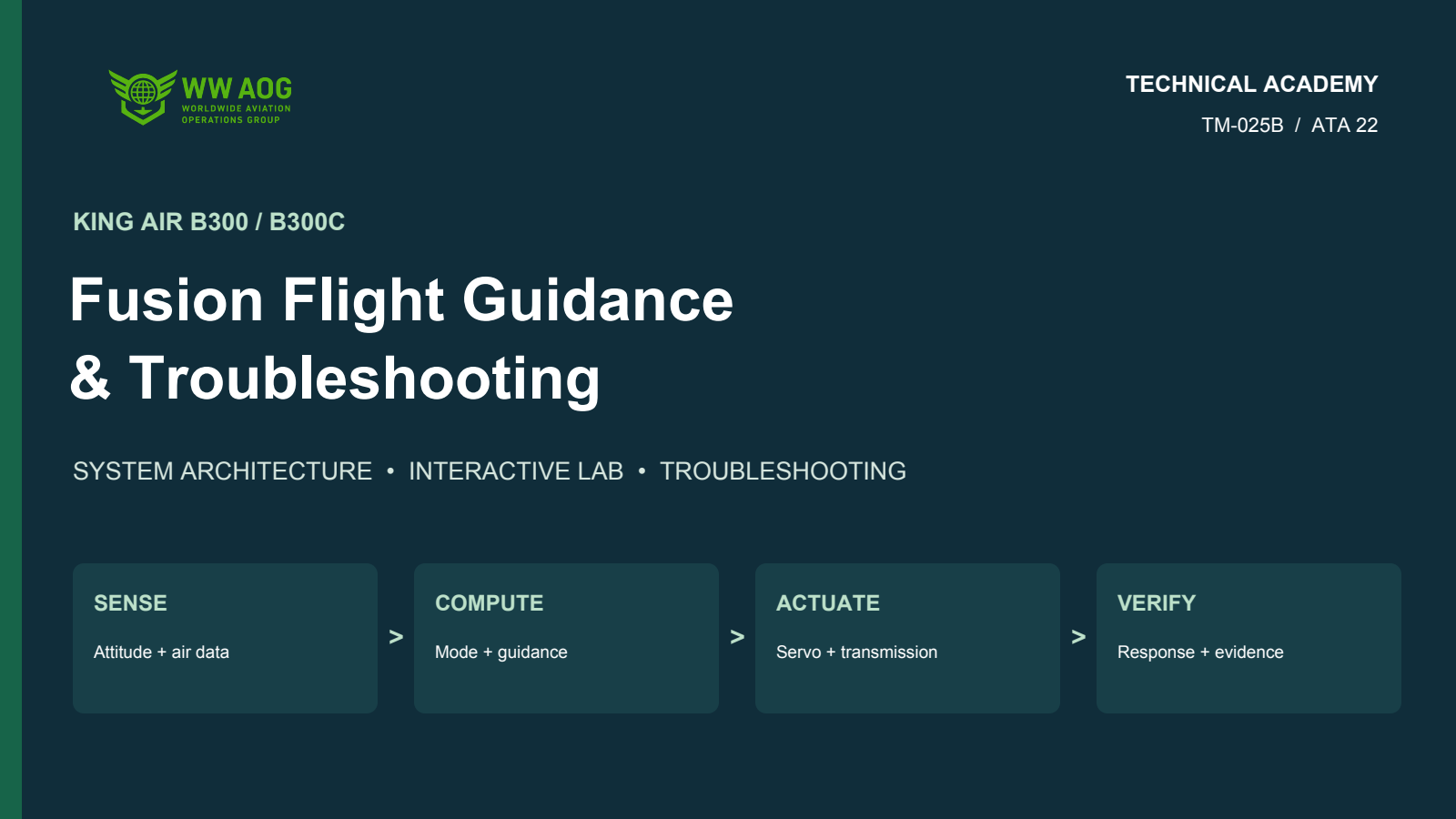
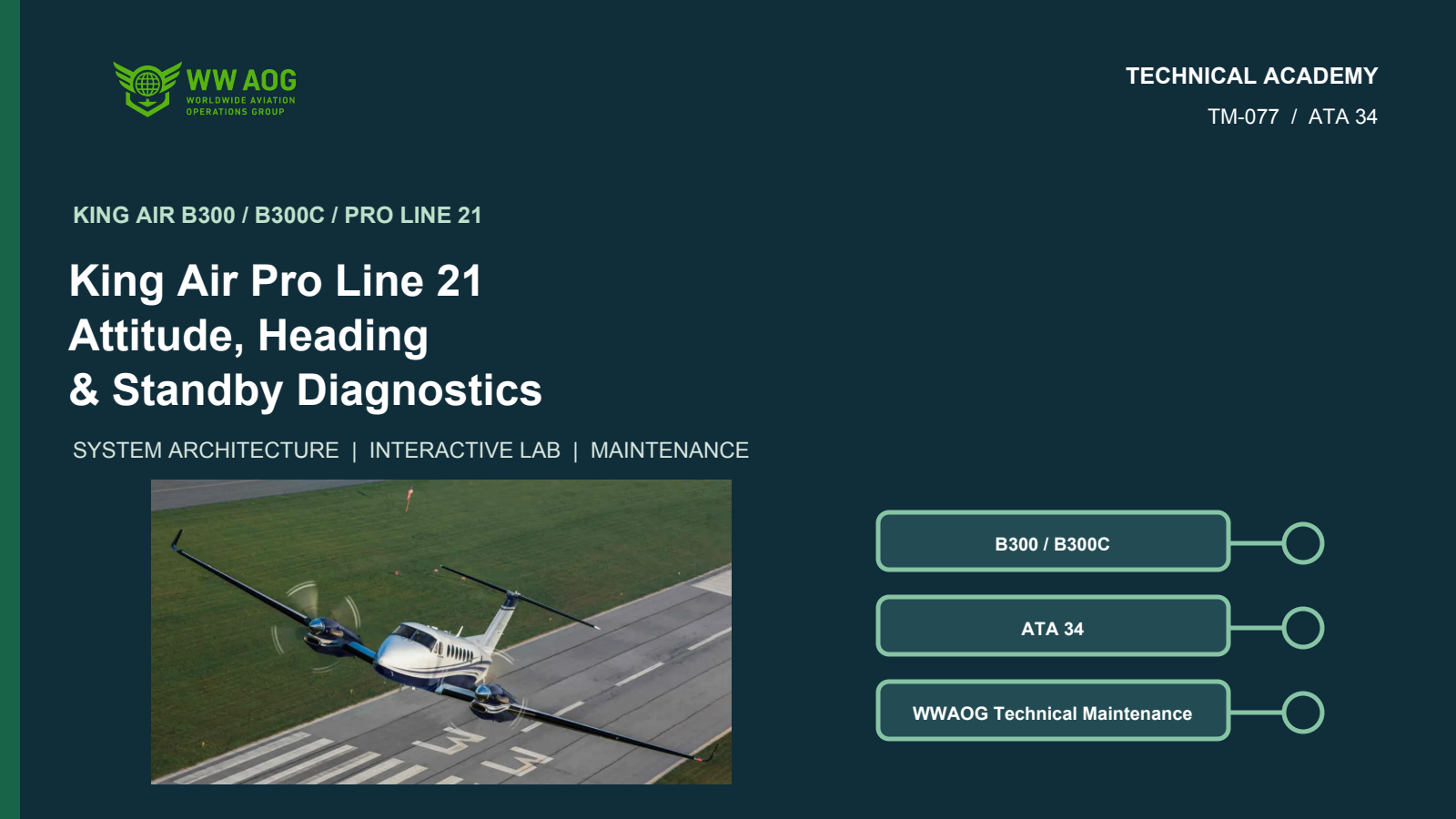
This King Air B300/B300C course collection separates Pro Line Fusion from Pro Line 21 installations. The Fusion systems course combines Rev E foundations with advanced B10 ATA 31/34/45/77 diagnostics, two handbooks, two workbenches and separate 50- and 48-question finals. Individual Fusion courses address flight guidance and communications/audio. The Pro Line 21 courses address ADC-3000 air data, attitude/heading and standby diagnostics, and NAV/DME/GPS/FMC/CDU and database-loading relationships. Review the named equipment and source scope on each course before enrolling. Detailed supplier tests, observed practical qualification and maintenance authorization remain separate.
Choose Pro Line Fusion or Pro Line 21 training
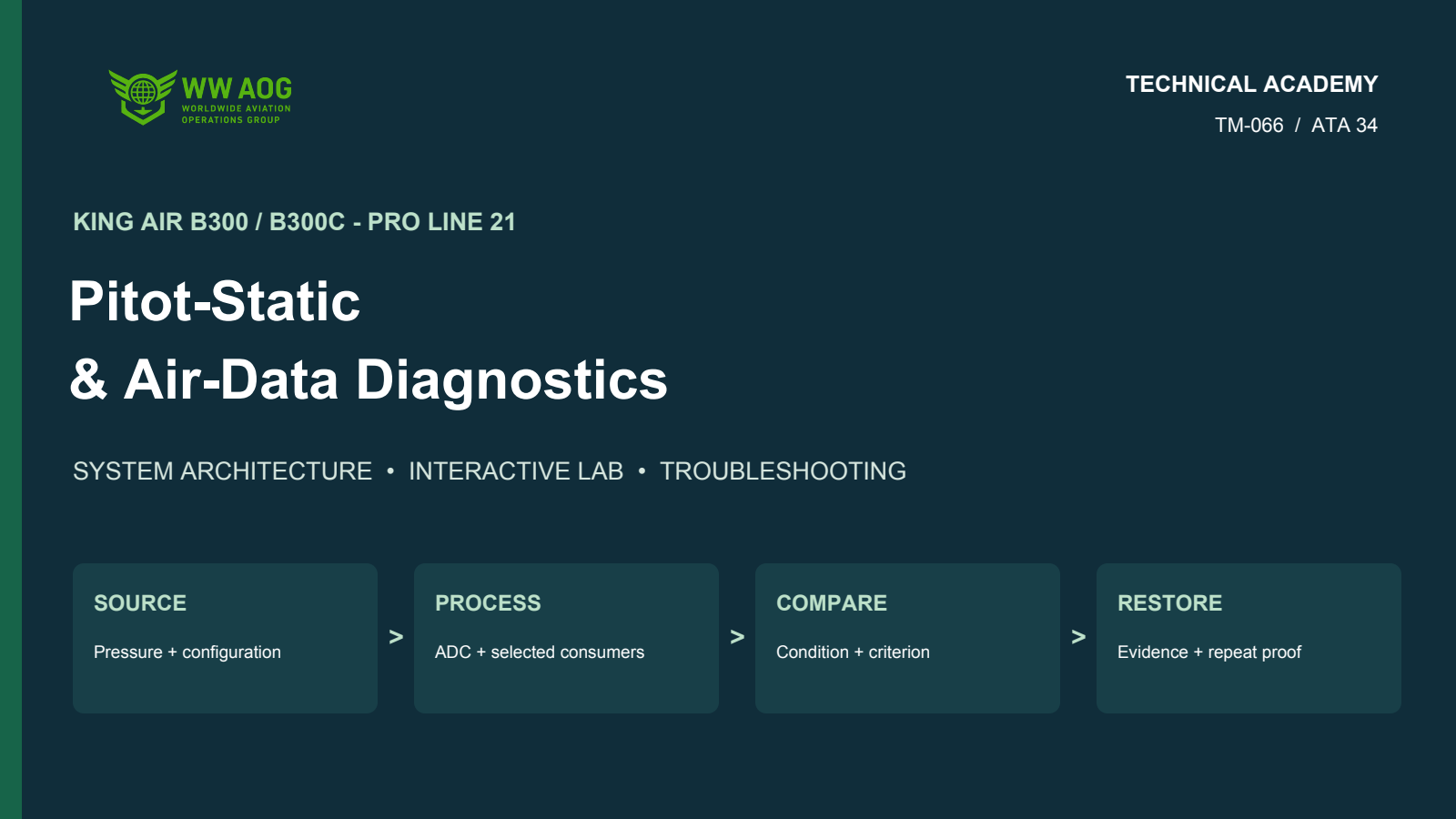
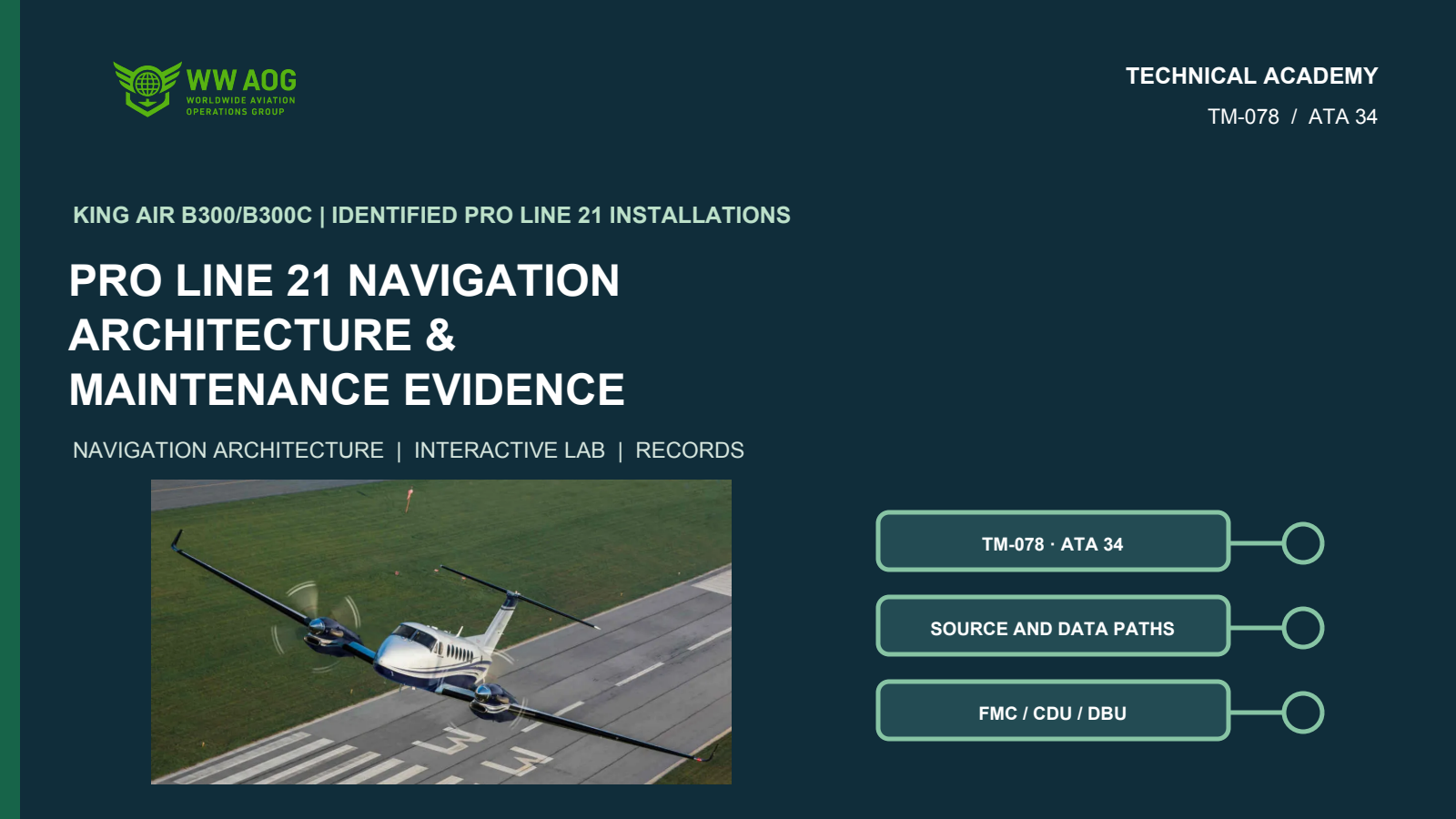
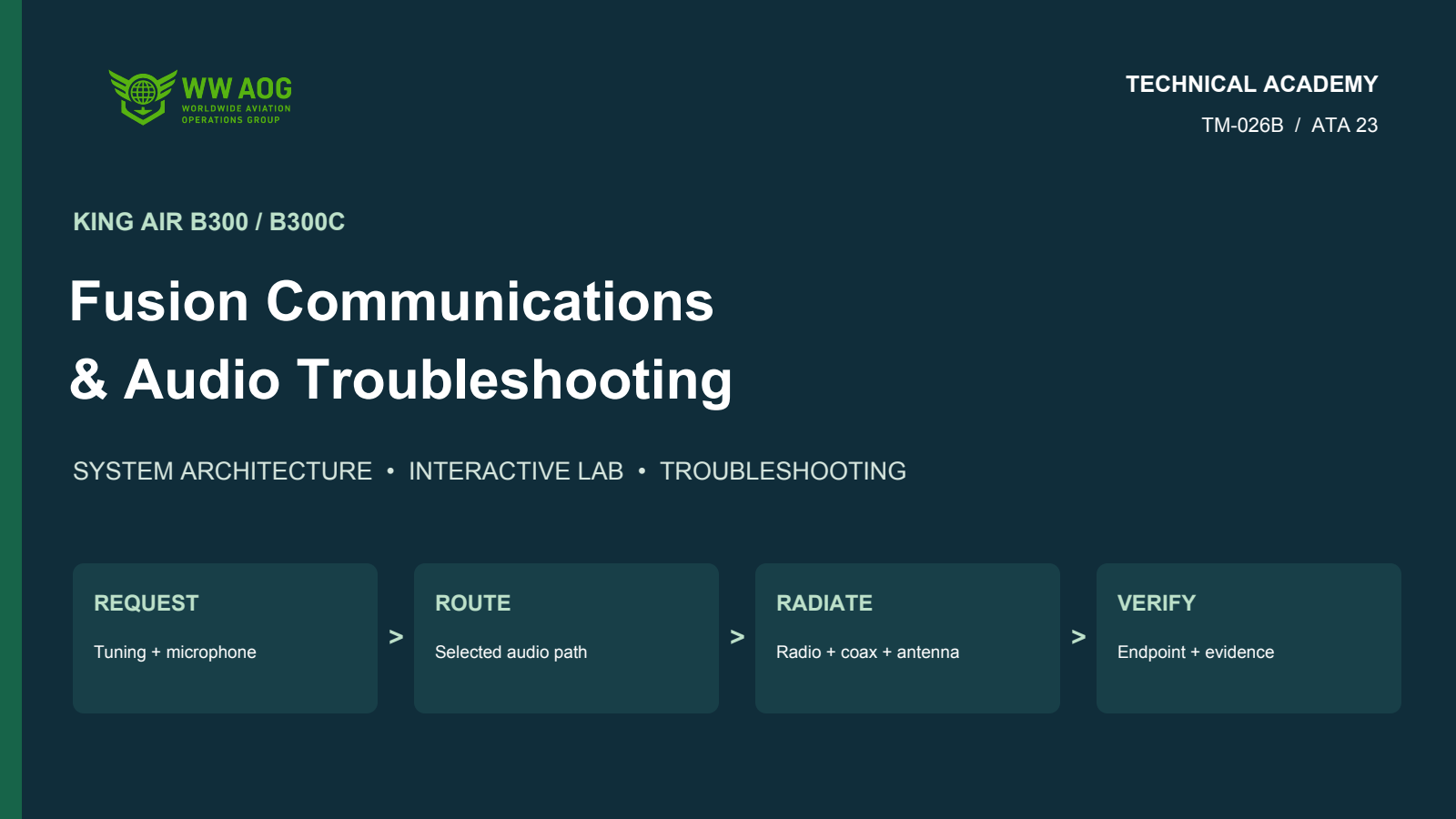
Match training to the installed King Air B300/B300C avionics. KA-FUS-100, TM-025B and TM-026B address their stated Fusion systems, flight-guidance and communications/audio scope. TM-066, TM-077 and TM-078 address the named Pro Line 21 air-data, attitude/heading/standby and navigation installations. The course-specific pages explain the equipment, topics and completion requirements before enrollment.
Understand how Fusion systems work together
Connect sensor inputs, data concentration, display applications and crew controls. The foundations explain flight-guidance, radio/audio and power relationships. The advanced section teaches current B10 display and configuration tasks, air-data and attitude paths, earlier and later standby installations, FMS/radio navigation, radar, traffic, terrain, OMS and engine-indication architecture. Original diagrams and worked examples explain why a particular symptom appears.
Apply the right task and installation criteria
The advanced section distinguishes primary and standby heading limits, zero-IAS accuracy and SSEC correction, radar control and RF boundaries, report-writing and software-load states, and independent EIS computation versus shared CAS presentation. Worked examples, fixed records and fresh independent decisions test those differences.
Learning outcomes
- Explain how Fusion inputs, computers and displays work together
- Distinguish source faults, shared data and normal reversion
- Apply the named installation and quantitative test criteria
- Interpret OMS reports, configuration and engine indications
- Preserve unresolved findings and required follow-up work
Choosing the right training scope
Practice 26 coached fault cases, 14 prediction-before-Apply exercises and 12 fixed work records across the two sections. Calculate errors using the named test and installation criteria. Complete each workbench, including its 12-decision independent review at 80% with all eight critical decisions correct in the same attempt. Pass both native finals at 80%; the overall certificate requires both handbooks, both labs and both finals. Detailed supplier-delegated tests and observed practical qualification remain separate.
WWAOG provides independent training. Course completion does not replace aircraft-specific maintenance data, employer authorization or applicable licensing requirements.