What you will study
Paired computers and mode evidence
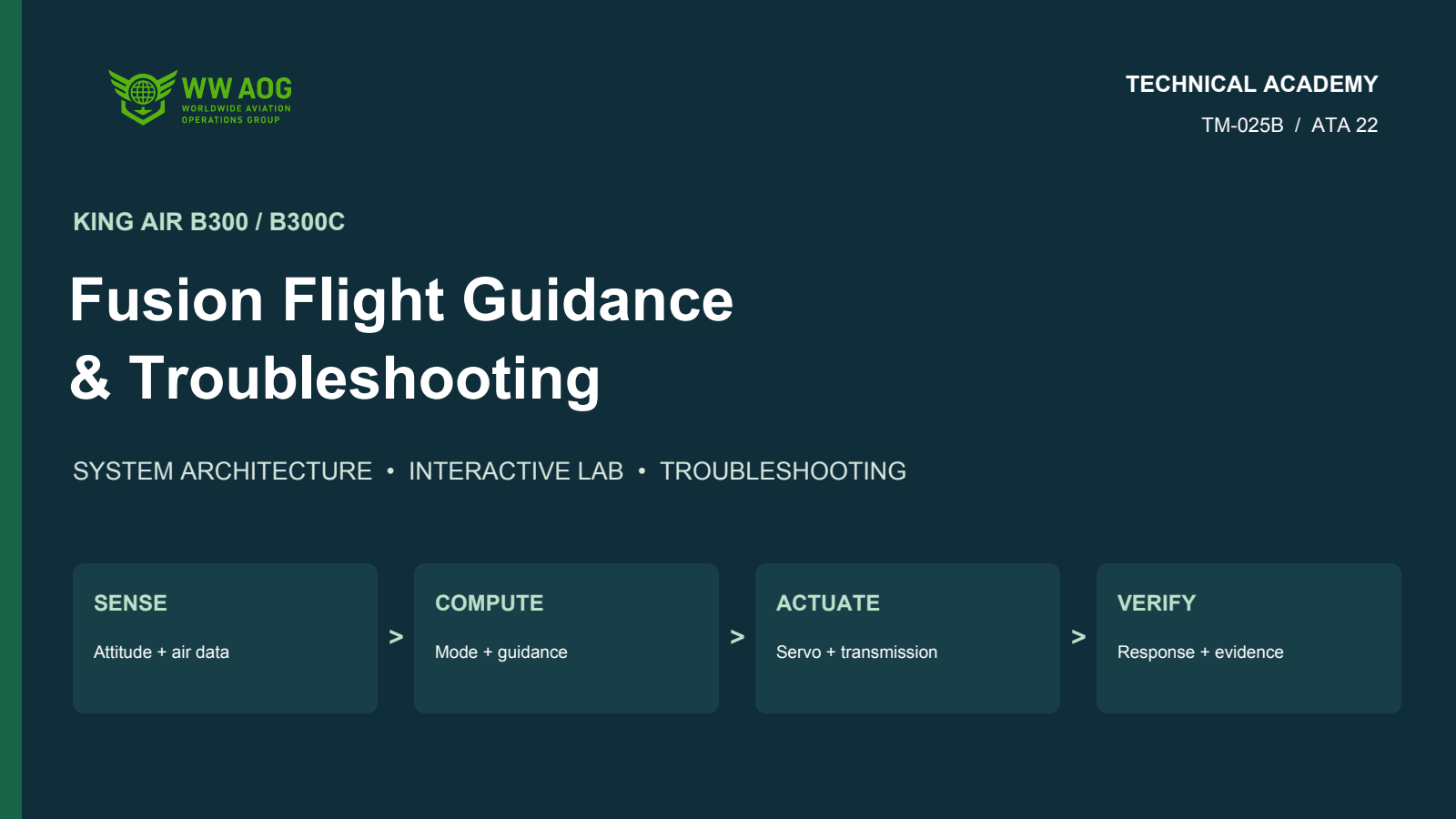
Trace the paired flight-guidance computers, mode selection and display evidence. Compare armed and active modes and the permissions needed to turn a selected mode into a valid control command.
Servos, pitch trim and protective disconnects
Follow servo command and pitch-trim response, including protective disconnects that interrupt control. Use axis-specific servo and mount comparisons to distinguish electronic evidence from mechanical resistance.
Diagnostic practice and torque comparisons
Eight lessons, six prediction-and-Apply exercises, an axis-specific torque bench, eight two-stage cases and twelve independent decisions develop fault-isolation judgment. Includes a 25-page handbook and separate 40-question final.
Learning outcomes
- Trace the distributed Fusion flight-guidance command path.
- Interpret mode permissions, startup evidence and protective disconnects.
- Compare axis-specific torque evidence with servo and mount behavior.
- Justify diagnostic checks using command, communication and physical-response evidence.
Aircraft and course applicability
Beechcraft B300/B300C with the described Fusion FGC-3000/FGP-3000 flight-guidance installation. Study source: supplied King Air 300-series manual 434-590169-0009, ATA 22 edition dated 1 May 2018. Confirm aircraft and installed-equipment effectivity before selecting tasks.
WWAOG provides independent training. Online completion records knowledge and simulation achievement; it does not replace observed practical qualification, employer authorization or applicable licensing. Use current aircraft-effective maintenance instructions for physical work.