What you will study
Choose the actual engine, avionics and fitted-system branch
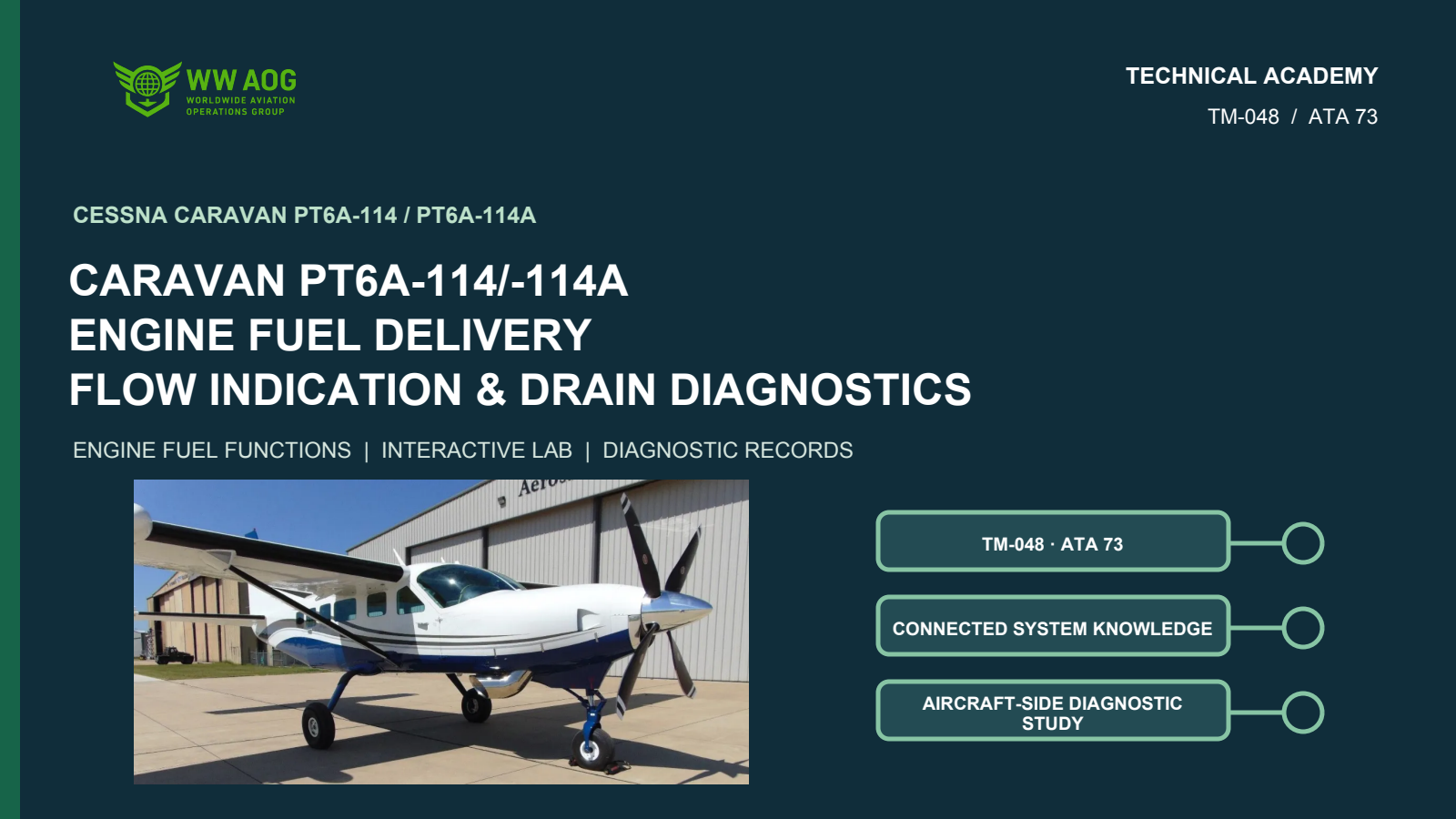
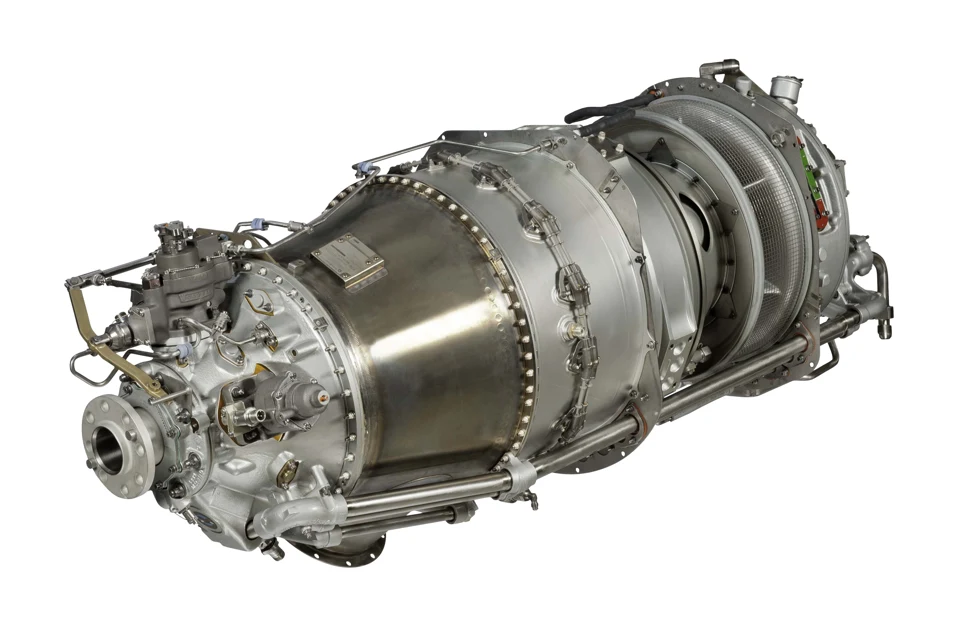
Build the configuration before choosing a test. Keep the older PT6A-114/-114A and Grand Caravan EX PT6A-140 paths distinct, identify the named G1000 generation and installed options, and trace the source, control, physical path and indication involved in the reported fault.
Connect fuel, electrical and indication evidence
Separate fuel delivery and contamination from flow indication and computed remaining fuel. Trace the power feed, return and sensor/data path independently so that one normal indication does not become proof of an entire installation.
Find the boundary between shared and local faults
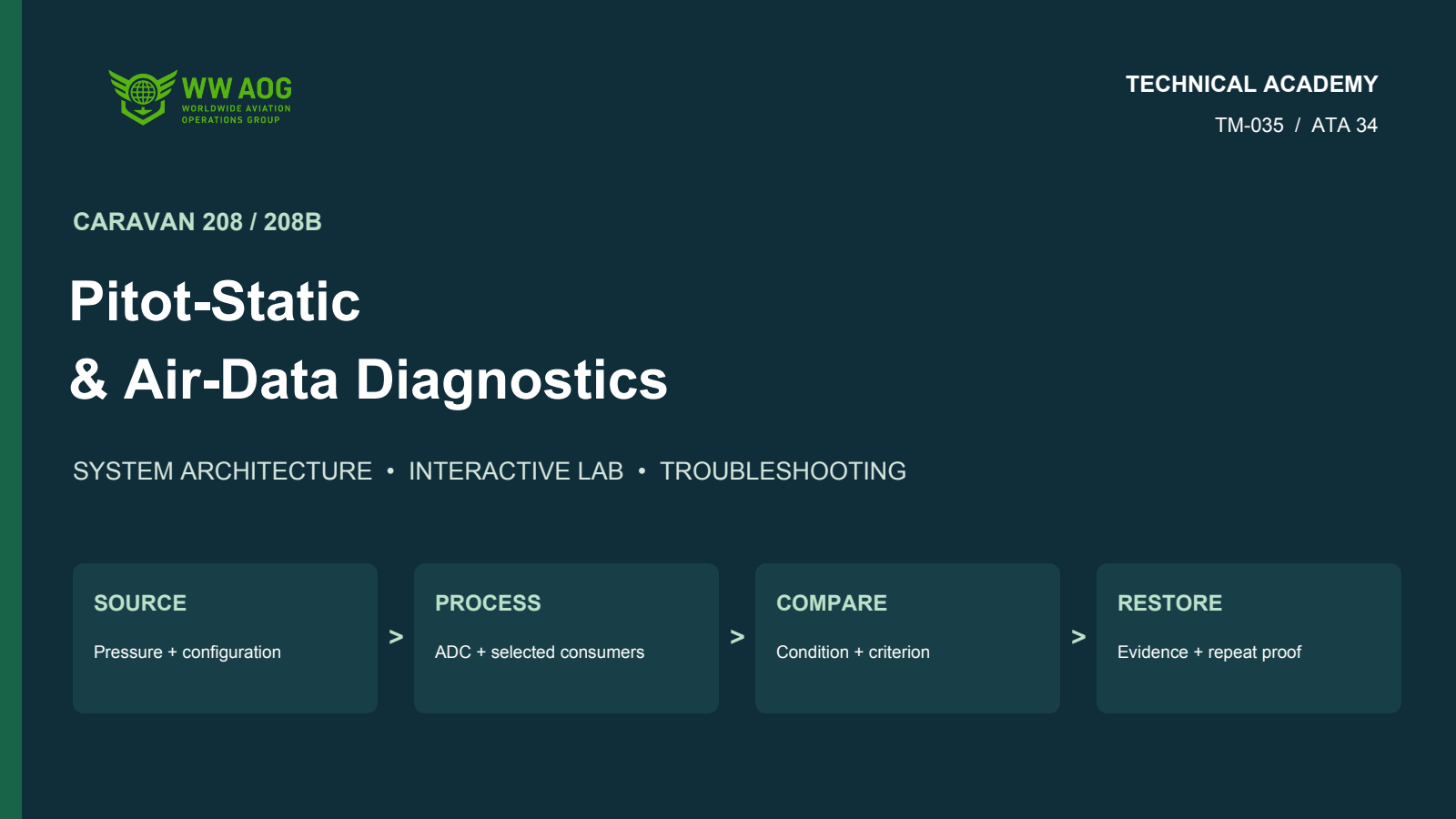
Compare shared air-data sources and configured standby evidence. Relate bleed pressure to ejector suction and the actual consumer, then distinguish a shared source problem from a downstream path or local response.
Plan inspection clocks and accumulated material loss
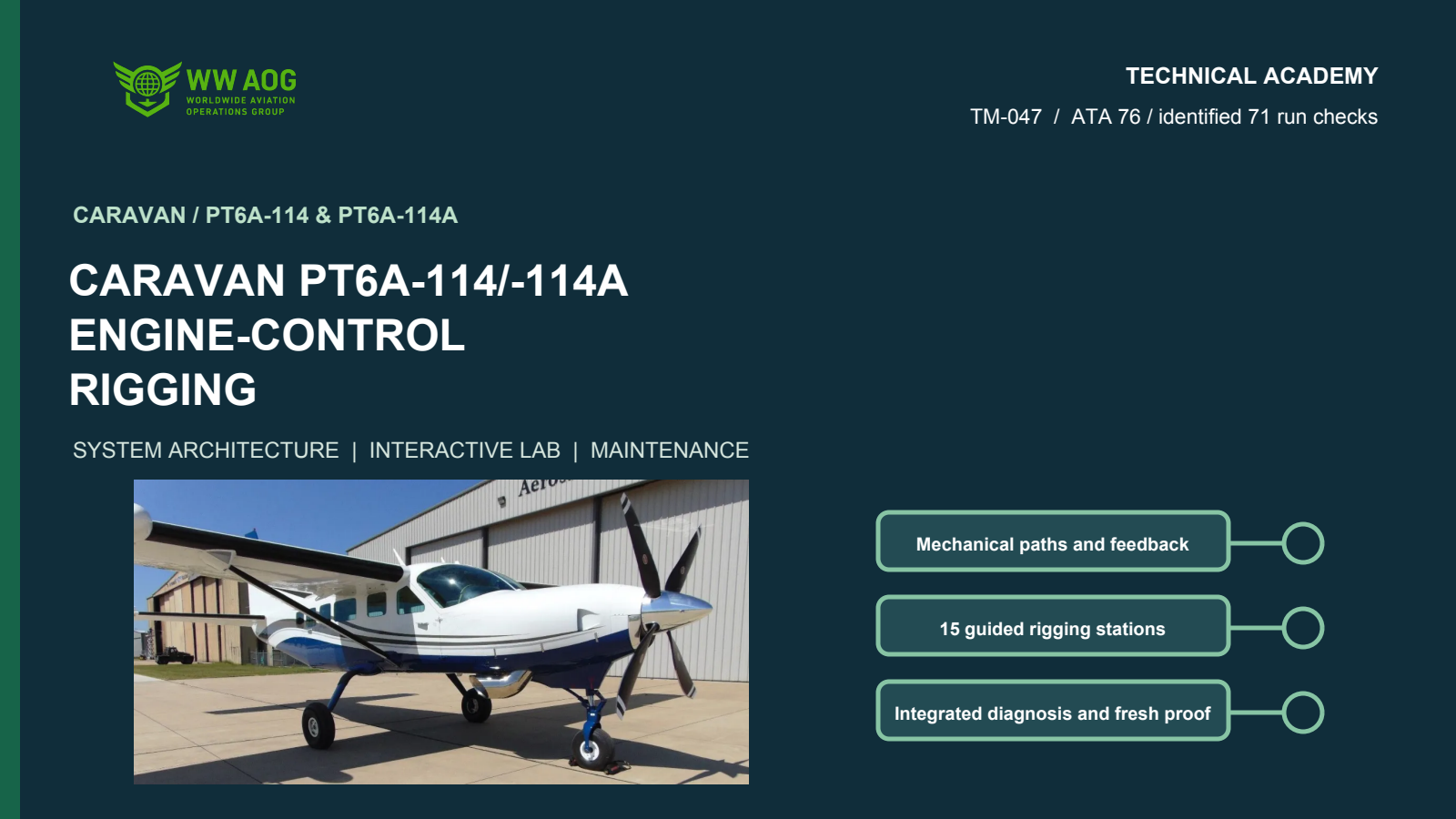
Connect control movement, physical output and displayed response. Calculate independent inspection clocks, landing counts and accumulated material loss. Identify the fresh affected tests, restoration and unresolved structural or system findings needed for a useful maintenance handoff.
Complete the integrated capstone learning path
Complete eight lesson checks, six prediction-and-Apply exercises, eight two-stage cases and six fixed records with 25 classifications and five entered calculations. The lab has 24 requirements; its 12-question independent review requires at least 80% and all eight critical decisions correct in one attempt. Pass the separate 32-question final with at least 26 correct. Online completion is separate from practical qualification and maintenance authorization.
Learning outcomes
- Identify the engine, avionics/software and fitted-system branches before choosing a test.
- Separate actual delivery, pressure and mechanical response from sensing, data selection and displayed results.
- Use source-qualified measurements and original calculations to interpret air-data, pneumatic, inspection-planning and structural records.
- Build a handoff that retains open findings and identifies the affected fresh tests and restoration evidence.
Aircraft and course applicability
Cessna 208/208B training for explicitly identified PT6A-114/-114A and PT6A-140 branches, named G1000 generations and fitted optional systems. Uses supplied Cessna D2078 Revision 42 June 2024 and Model 208 SRM D5132-9-13 Revision 9 August 2018 study references. Original fictional records develop diagnostic reasoning; current applicable aircraft/supplier/modification instructions govern actual work. Online completion is separate from hands-on competence and maintenance authorization.
WWAOG provides independent training. Online completion records knowledge and simulation achievement; it does not replace observed practical qualification, employer authorization or applicable licensing. Use current aircraft-effective maintenance instructions for physical work.