What you will study
Connect cockpit controls to engine and propeller response
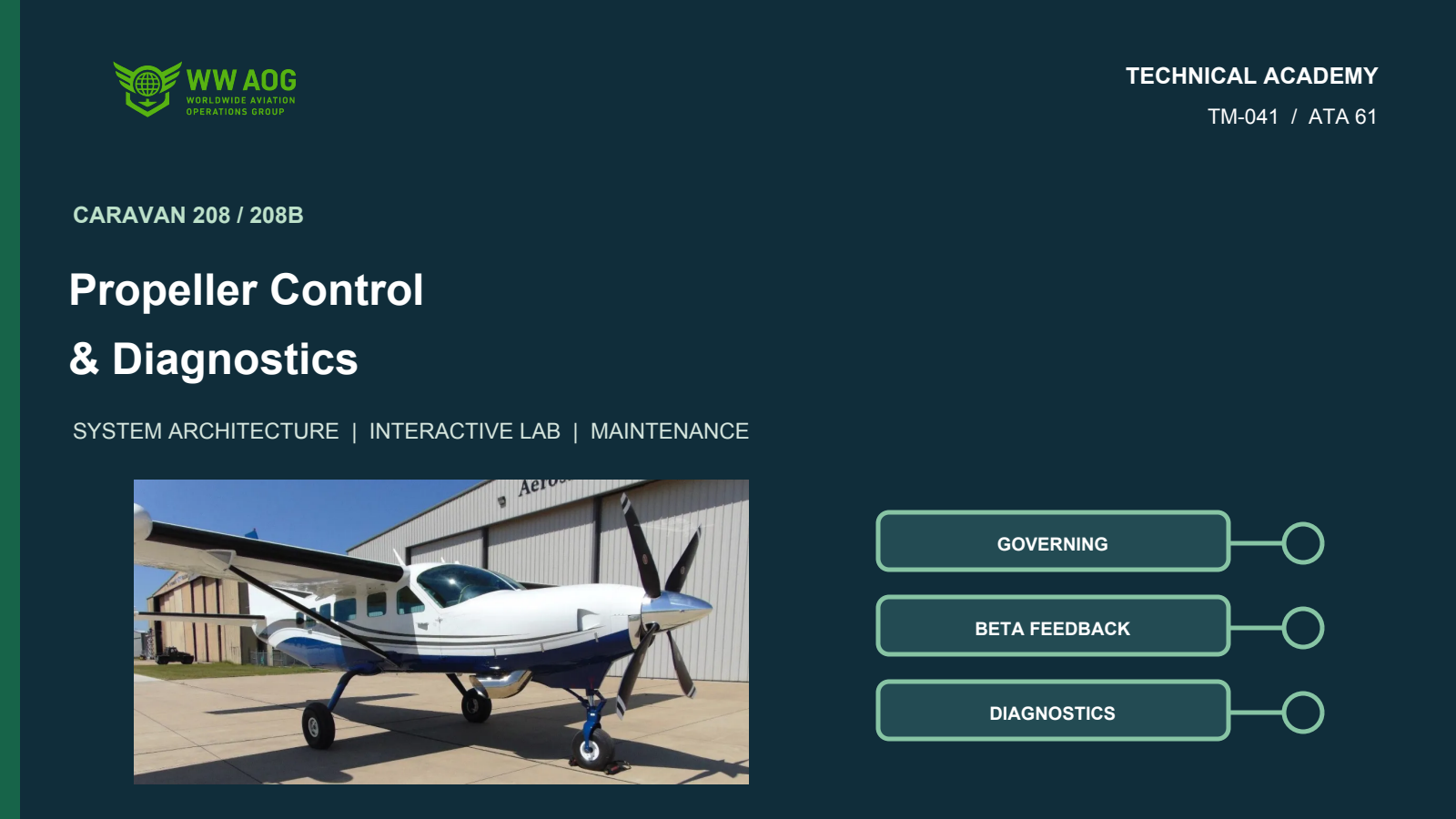
Trace the separate power, condition, propeller and emergency-power paths. Explain how the power cable and cambox establish FCU demand, how the propeller governor controls oil and blade angle, and how beta feedback closes a position loop. Learn why actual engine-end movement is different evidence from cockpit position or annunciation.
Establish sound cable references and forward-linkage datums
Inspect anchors, rod ends, friction and free travel before tuning geometry. Identify internal cable travel, the beta-clevis slot/cap-nut datum, the air-bleed interconnect and rear-clevis alignment. Keep their different reference holes, offsets, engagement and cushion checks separate. A satisfactory measurement can support a no-adjustment decision.
Set pickup and prove each physical endpoint
Use the actual follower track point for cambox indexing and the named pickup faces for FCU interconnect work. Distinguish follower clearance from rod-flat clearance, actual cutoff from LOW-IDLE orientation, and MAX from FEATHER. Identify protected FCU screws before choosing a permitted external correction.
Separate EPL, loaded-idle and stopped endpoint evidence
Keep EPL light behavior, full arm stroke and minimum ineffective travel as distinct checks, using the stated serial/modification branch. Compare LOW and HIGH idle in their separate named load setups. Stop and select CUTOFF for fresh hard-stop and cushion observations; a good running speed cannot supply that endpoint evidence.
Observe reverse, governing and acceleration after a trial
Compare the propeller-speed decrease before Ng rise separately from reverse torque and operating limits. Test maintained governing rather than a brief crossing of the desired RPM. For acceleration, select the correct PT6A-114 or PT6A-114A branch and calculate the timing endpoint from recorded takeoff Ng. Supplied before/after records do not calculate performance from screw turns, and a permitted adjustment can still end in a justified hold.
Complete the independent rigging learning path
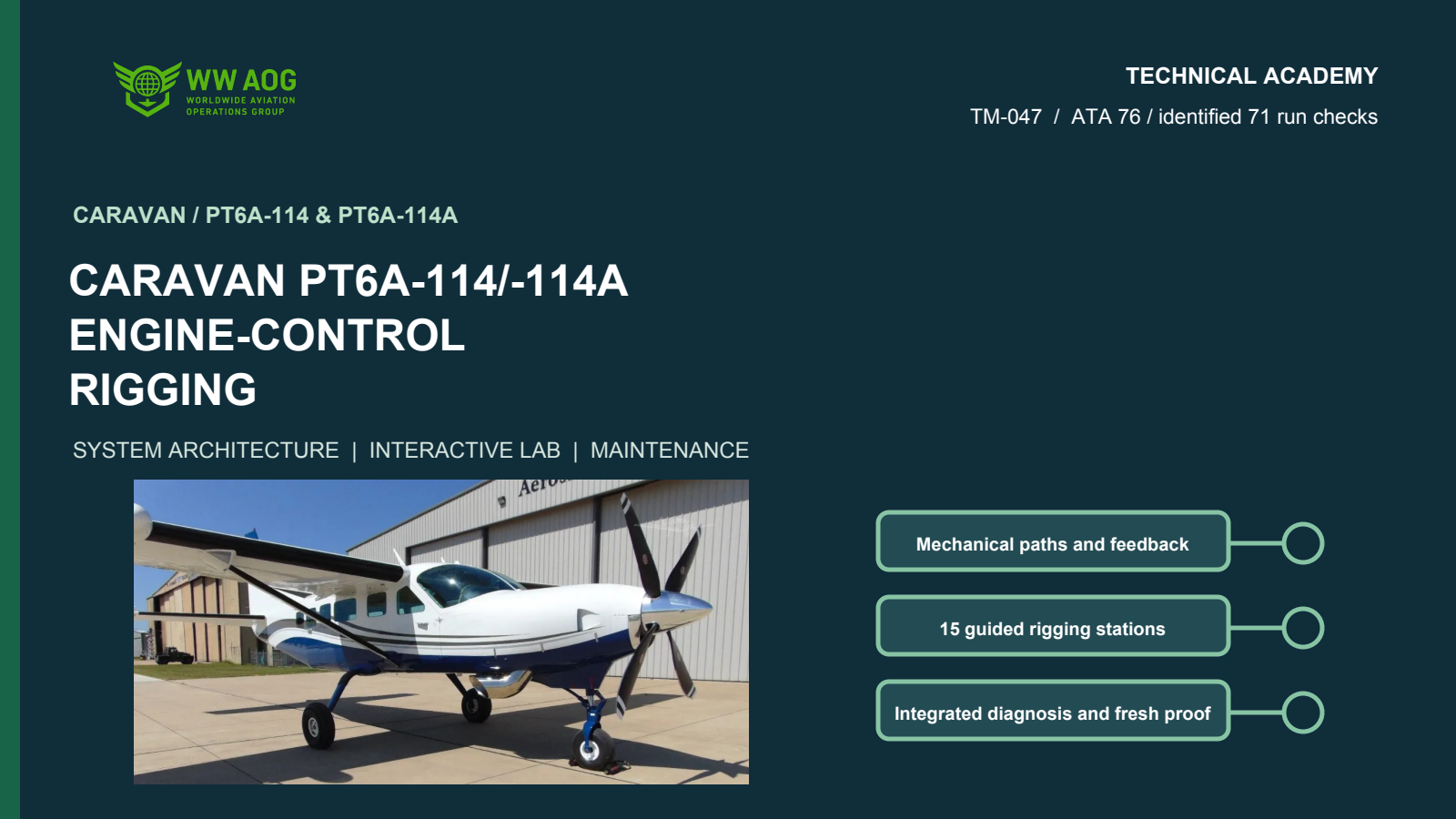
Ten lesson checks, 15 guided action stations and eight integrated fault jobs lead to six fixed records with 24 judgments and four entered calculations. The separate 12-decision independent job requires at least 80% and all eight critical decisions correct in the same attempt, plus its required actions, fresh measurements and restoration. The lab has 35 completion requirements. Pass the separate 60-question final at 80%, with at least 48 correct. The online certificate requires the handbook, completed lab and passing final; practical qualification remains separate.
Learning outcomes
- Explain how the four cockpit controls act through the cable, cambox, FCU and propeller-governor paths.
- Identify the correct mechanical datum, measuring faces, configuration and setup before adjusting.
- Distinguish a correct running result from actual cutoff, cushion, full stroke and static endpoint evidence.
- Repeat proof made stale by an adjustment and retain an unresolved finding when the supplied evidence does not support closure.
- Prepare a traceable record of the original condition, actual action, fresh verification and restoration.
Aircraft and course applicability
Cessna Model 208/208B with identified PT6A-114 or PT6A-114A engine controls. External control rigging and named airframe operational checks are covered, with engine, serial/modification and test-setup branches kept separate. Based on supplied Cessna Maintenance Manual D2078 Revision 42, June 1, 2024. Grand Caravan EX/PT6A-140 uses a separate rigging course. Current applicable aircraft and referenced engine instructions govern physical maintenance.
WWAOG provides independent training. Online completion records knowledge and simulation achievement; it does not replace observed practical qualification, employer authorization or applicable licensing. Use current aircraft-effective maintenance instructions for physical work.