What you will study
Mechanical restraint, support and pressure sealing
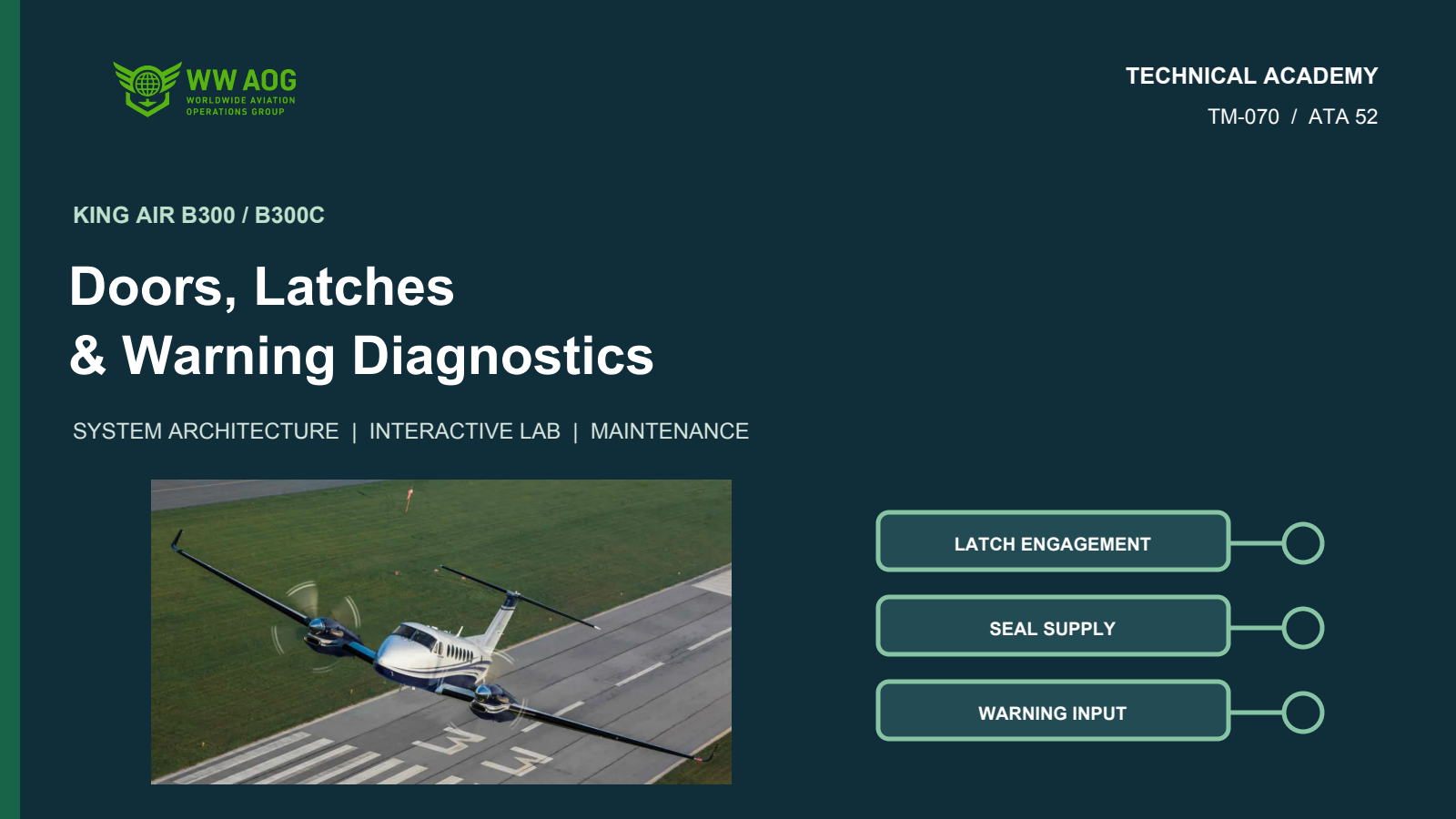
Explain FL hooks, four latch pins, support cable and hydraulic damper. Trace pneumatic seal supply and distinguish pressure locking. Follow FM cable drums, camlocks, lower pins, gas springs and support rod without treating the two door architectures as interchangeable.
Warning circuits, measurements and inspection evidence
Select the installed warning-kit branch before interpreting test points. Compare pin travel, upper-pin engagement, handle torque and hook-pin wear independently. Connect emergency-exit operation, support, cracks and mandatory life records to a complete diagnostic handover.
Practice, evidence and assessment
Eight lessons, six prediction-and-Apply exercises, eight two-stage cases, a required measurement bench and twelve independent decisions provide 24 lab completion requirements. A separate 40-question final requires 80%; all activities are required for the completion certificate.
Learning outcomes
- Distinguish FL and FM door architecture and fitted warning-kit configuration.
- Trace handle commands, mechanical transmission, seal supply and warning response.
- Interpret travel, engagement, locking torque and wear at defined task boundaries.
- Retain physical security, support, warning and life-status findings until each is resolved.
Aircraft and course applicability
B300 FL-series entrance door and B300C FM-series cargo/airstair systems in supplied 130-590031-11 Chapter 52. Serial-specific inspections and Kit 101-3299 warning branches remain distinct. Fusion and other modified installations require their own applicable data. Beechcraft Super King Air B300/B300C Maintenance Manual 130-590031-11, supplied Chapter 52 effective-page list November 1, 2025. FL latch and inspection pages November 2025; FM warning adjustment March 2024; descriptions April 2018. Other task pages retain their listed dates.
WWAOG provides independent training. Online completion records knowledge and simulation achievement; it does not replace observed practical qualification, employer authorization or applicable licensing. Use current aircraft-effective maintenance instructions for physical work.