King Air 200/B200 Lighting Systems and Fault Isolation
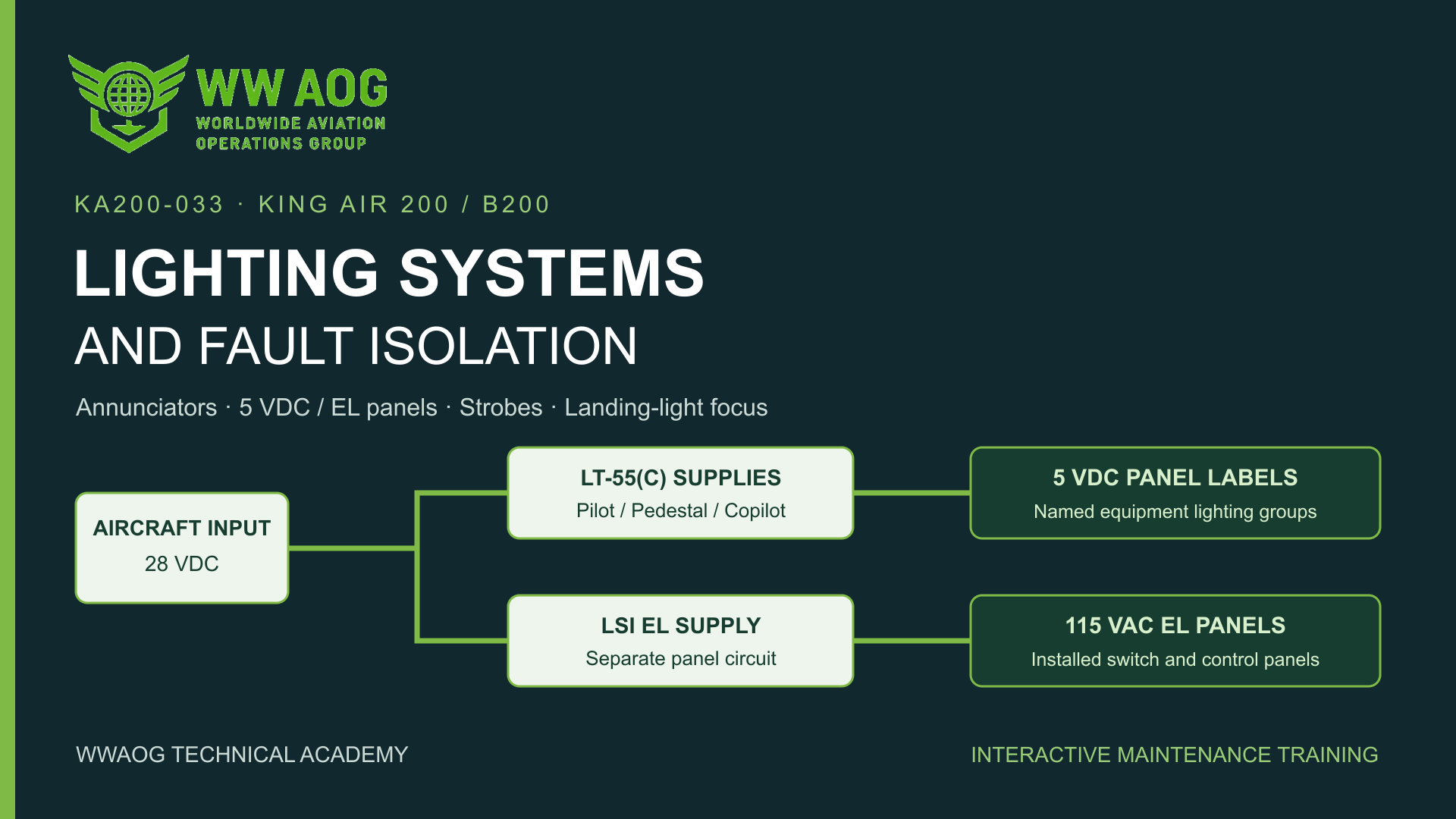
Locate real Pro Line 21 panels before tracing classic annunciators, panel-lighting groups, electroluminescent panels, strobe supplies and landing-light focus. The 38-page handbook, photo explorer and five visual views support ten lesson decisions, ten paired fault cases and three independent jobs, followed by a separate 40-question final at 80%.
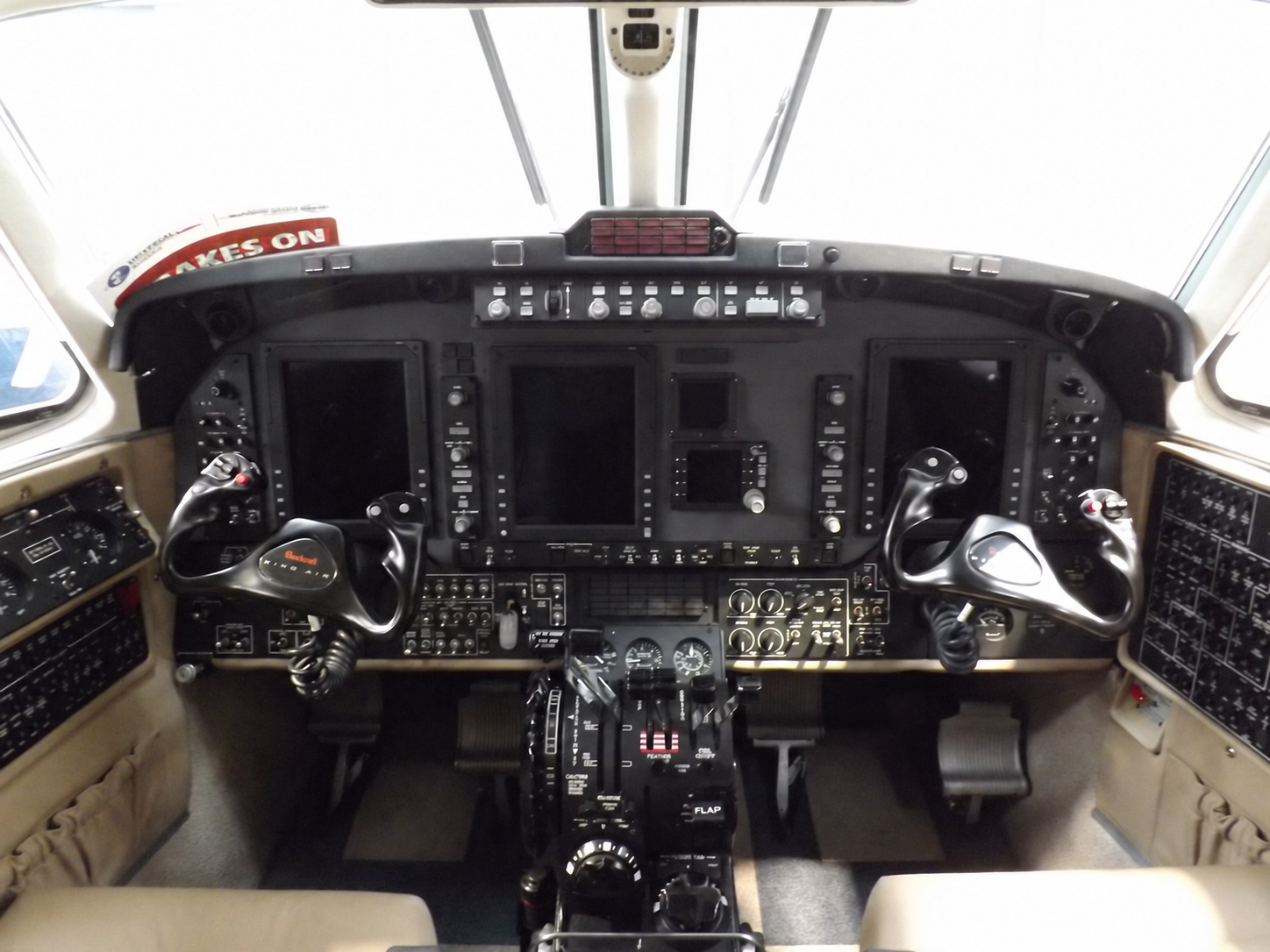
Use the real Pro Line 21-layout photograph to locate the FGP, pilot and copilot PFDs, MFD and RTU. The photo is a configuration example; the lesson keeps panel-legend lighting separate from display information. Separate the actual condition, continuing legend, flasher acknowledgment, CAUTION OFF reminder and photoelectric dimming override.
Actual cockpit lighting power paths
Follow 3310PS1/PS2/PS3 28-to-5 VDC groups separately from the LSI 115 VAC EL supply. Locate the supplies and distinguish conversion faults from downstream distribution.
Strobes and exterior installations
Identify center-section versus distributed supplies, qualified channel comparisons, stored-energy controls, tail-shield grounding and disturbed airframe bonds.
Measured inspection and focus records
Interpret EL-panel warp, concentrated beam-center height/separation, calibrated self-lit sign comparisons and the named emergency-light kit sequence.
Learning outcomes
Select the installed lighting task from serial, modification and component records.
Trace a reported dark lamp or label through its actual control, conversion and load path.
Distinguish acknowledgment and display suppression from correction of a continuing aircraft fault.
Calculate and classify supplied panel-warp and landing-light focusing measurements.
Build a complete repeated lighting-function and physical-restoration record.
Aircraft and course applicability
Systems and maintenance-record training for identified King Air 200/B200 lighting branches in Maintenance Manual 101-590010-19 Chapter 33, supplied LEP November 1, 2024. Installed avionics, serial, EL/strobe part and modification records and Kit 101-5301 select the actual branch. Physical work uses current applicable instructions, qualified personnel and the required electrical/stored-energy controls.
WWAOG provides independent training. Online completion records knowledge and simulation achievement; it does not replace observed practical qualification, employer authorization or applicable licensing. Use current aircraft-effective maintenance instructions for physical work.
Before you enroll
Is this course suitable for my aircraft or role?
Systems and maintenance-record training for identified King Air 200/B200 lighting branches in Maintenance Manual 101-590010-19 Chapter 33, supplied LEP November 1, 2024. Installed avionics, serial, EL/strobe part and modification records and Kit 101-5301 select the actual branch. Physical work uses current applicable instructions, qualified personnel and the required electrical/stored-energy controls. If you are choosing training for a different installation or a team, email info@wwaog.com with your aircraft configuration, learner experience and training goals.
Where do I find the price and sign up?
Open the KA200-033 enrollment page for the current price, course contents and signup options. Enrollment takes place in WWAOG Academy, where learners access their assigned content.
Can WWAOG train our team at our location?
Yes. Tailored on-site training is available by separate arrangement. Describe your aircraft, location, team size and learning objectives so WWAOG can propose an appropriate scope.
KA200-033 · Start with the real cockpit
Find the Pro Line 21 panels before tracing their lighting
Find the physical panel first, then distinguish its illuminated labels from the information shown on a display. Select a numbered location to see its purpose and the named lighting connection taught in this course. These labels identify visible equipment; they do not operate it or diagnose the photographed airplane.
“Beech Super King Air B200GTI cockpit” by James, via Wikimedia Commons. CC BY-SA 2.0. Aircraft registration removed for privacy. Interactive labels by WWAOG. The photograph and labeled photo view are licensed under CC BY-SA 2.0; assessment text remains separate. No photographer or manufacturer endorsement is implied.
Find it in the photograph, then read its action, purpose and connection to the rest of the system. You can also choose a named item in the list. Keyboard users can use Tab and Enter or Space.
A photographed Pro Line 21-layout example. The source title identifies this cockpit as a B200GTI; this is not proof of a particular 200/B200 serial, engine or installed part. Match the aircraft records and applicable Chapter 33 branch before a maintenance test. Dark screens in this photograph do not establish a fault.
This guided photo activity explains the visible equipment. Selecting a label does not operate an aircraft control or record course completion. Continue with the system diagram and supplied fault record to practice troubleshooting.
Free course sample · KA200-033
Learn the relationship. Test your reasoning.
Try a short teaching exercise from the subject of King Air 200/B200 Lighting Systems and Fault Isolation. No account needed.
About 2 minutes
01 · Understand
On the identified Pro Line 21 installation, 3310PS1 supplies 5 VDC lighting to the pilot FGP, RTU, reversionary controls, MFD and pilot PFD/DCP/ACP panel labels. AFD imagery is a separate function. A measured supply output and a measured panel-branch input are different fault boundaries.
Separate converter output from the named panel branch
3310PS1 output: qualified 5 VDC→
Named pilot PFD/RTU branch: measured 0 VDC→
Compare downstream harness, connector and labels
02 · Read the supplied record
Supplied training record: pilot PFD/RTU labels are dark; neighboring pilot-group labels and copilot labels illuminate. Under a qualified fixture load, 3310PS1 output is 5 VDC but the identified PFD/RTU branch connector is 0 VDC. Full-bright command and local return are confirmed.
Original public teaching example based on the course’s published scope. Supplied records and values are training data. Aircraft maintenance uses current applicable instructions; this sample does not record course completion.
Our aircraft systems courses use manufacturer technical manuals to support pilots and maintenance personnel working in FAA- and EASA-regulated aviation. Training combines detailed system explanations, knowledge checks and interactive exercises for initial familiarization and recurrent study.
Training at your location
Your aircraft. Your team. A course built around both.
WWAOG offers tailored on-site courses for operators, maintenance organizations and government teams. We can shape the course around your aircraft configuration, installed systems, technician experience and operational training goals.
Tell us what your team needs
Aircraft model and equipment configuration
Location, group size and technician experience
System topics and desired learning outcomes
Preferred dates and available training resources
We’ll agree the scope, delivery plan and quotation before scheduling. Tailored on-site training is arranged separately from individual online course enrollment.
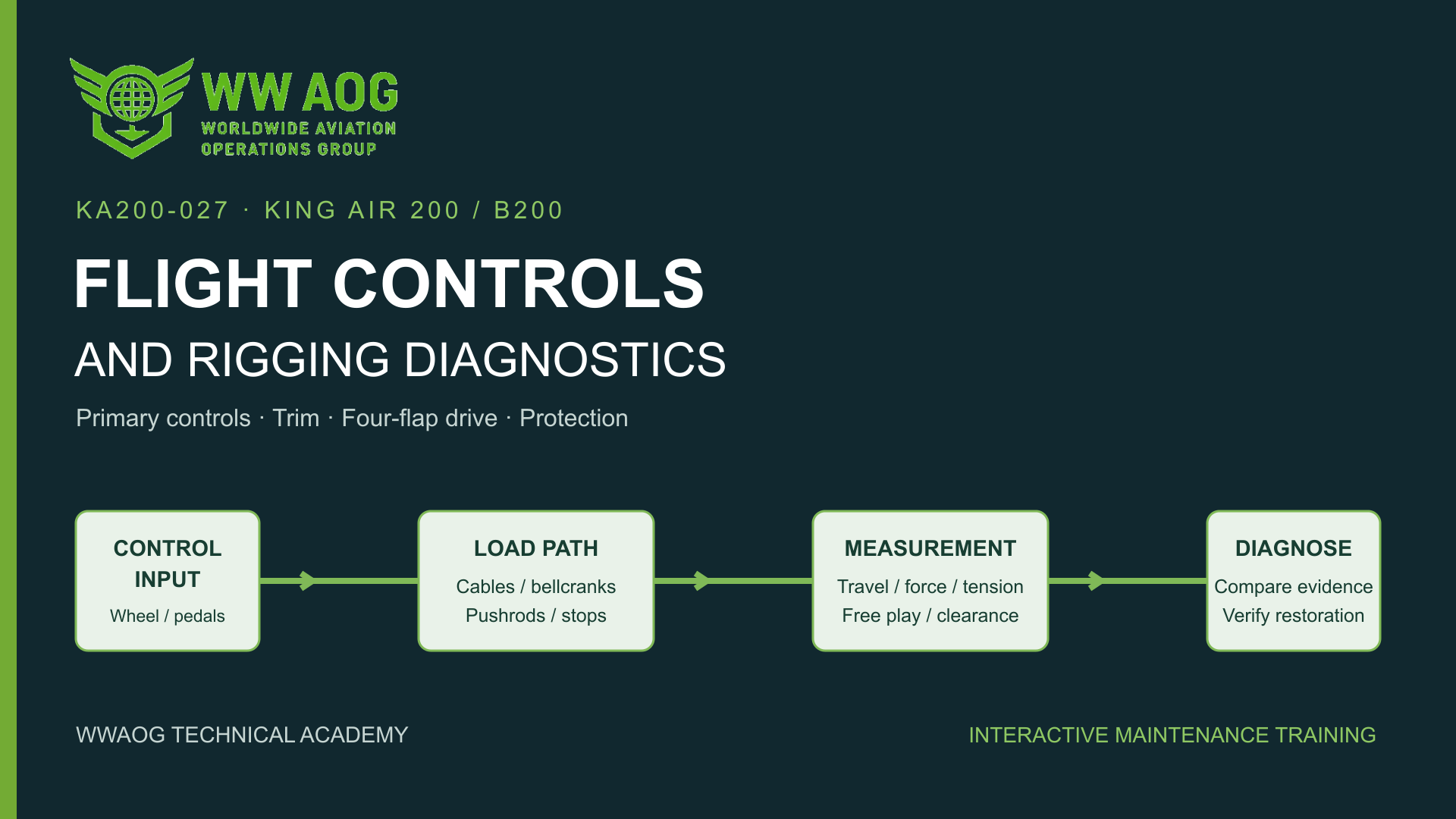
Trace manual aileron, elevator and rudder controls, separate trim drives, conventional rudder assistance and the four-flap protection system. A 39-page handbook and clickable visual workshop connect ten lesson decisions, ten paired fault cases and three independent five-field rigging jobs. Includes a separate 40-question final at 80%. Locate real control wheels, electric-trim switches, rudder trim and flap controls, then follow the normal mechanical roll-control flow.
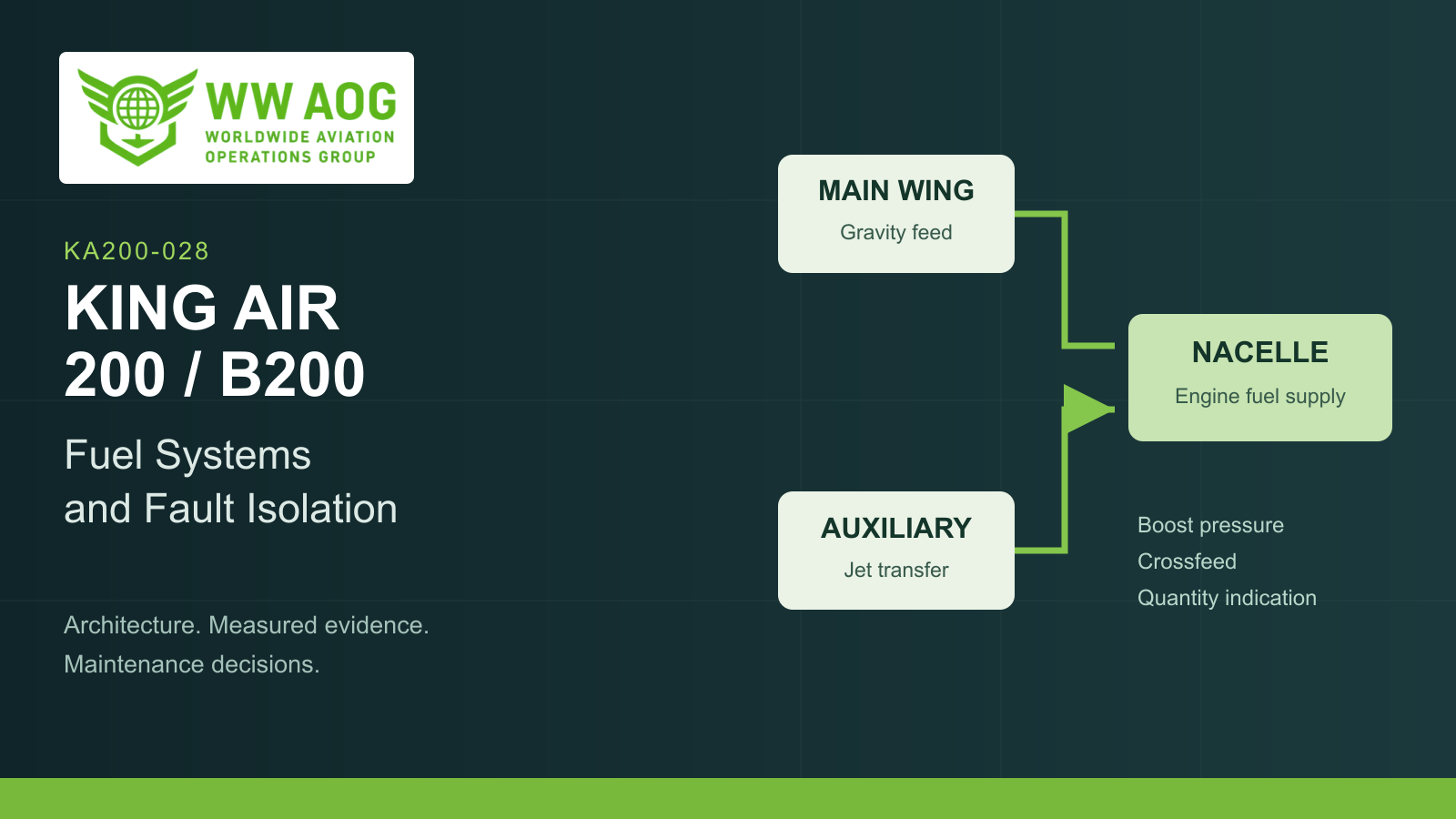
Trace main-wing gravity feed, auxiliary jet-pump transfer, standby boost and crossfeed using the actual King Air 200/B200 component names. A 35-page handbook, interactive fuel schematic, ten two-part fault cases and three measured work records connect system operation to a defensible diagnosis. Includes a separate 40-question final at 80%.
Read the applicable maintenance task, trace named circuits and identify complete parts rows. A 31-page illustrated handbook, nine lesson decisions, ten two-part practice cases and three document work orders connect aircraft effectivity, wiring sheets, connector views and IPC parts requests. Includes a separate 40-question final at 80%.