What you will study
Follow physical sensing before interpreting a display
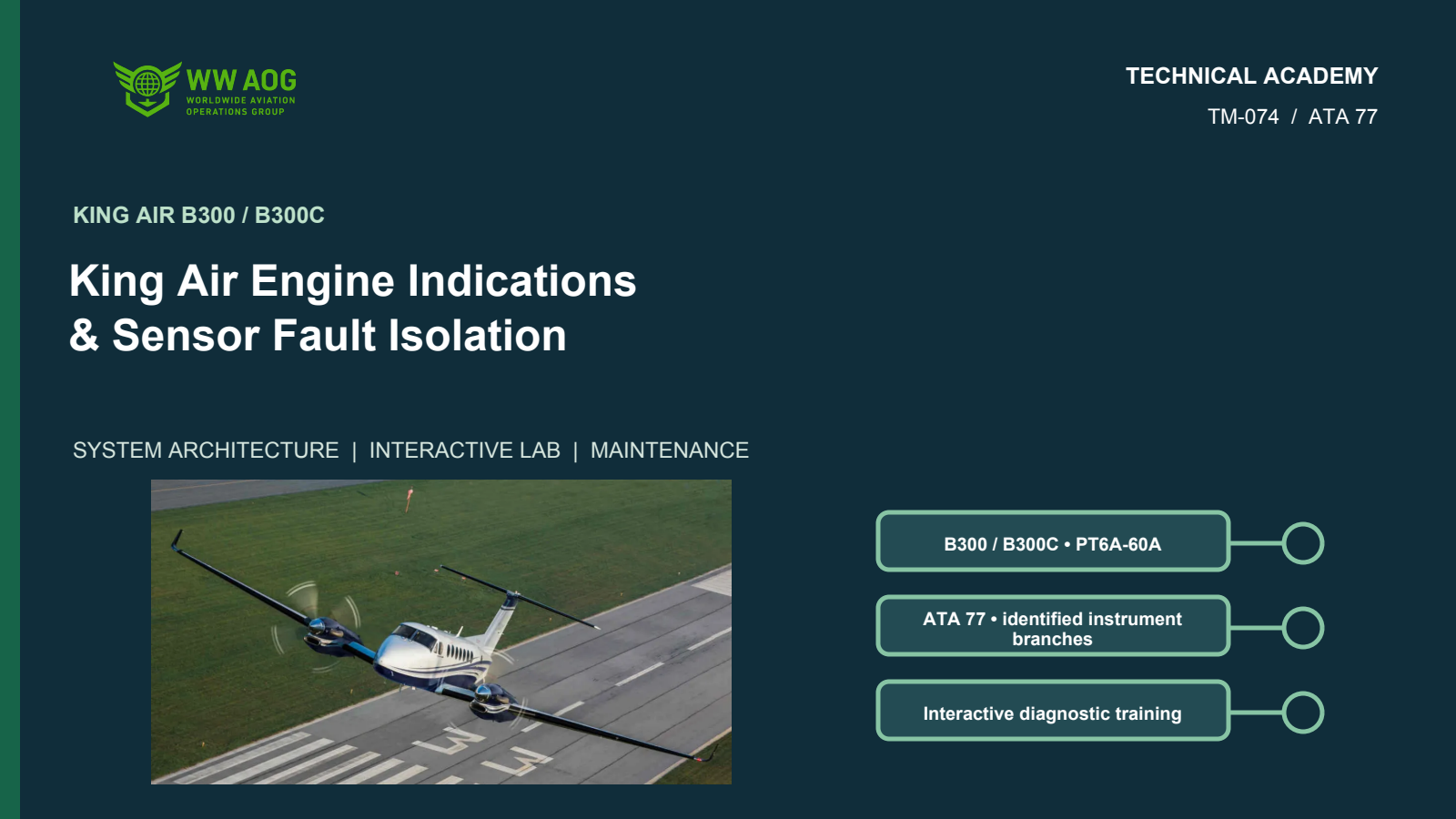
Distinguish thermocouple temperature, accessory-gearbox N1 percentage, reduction-gearbox N2 RPM, torquemeter-pressure conversion and actual fuel flow. Early and later standalone instruments have different task boundaries and tables; a digital number alone does not identify integrated equipment. Six prediction-and-Apply views expose the effect of supplied prerequisites without asserting universal shared-sensor wiring or diagnosing a unique failed part.
Select the ITT branch, preparation and measurement boundary
Use the actual serial and installed instrument before selecting early, later or integrated ITT comparisons. Separate indicator calibration from the ambient and elapsed-time conditions for resistance work. Retain polarity, compensation, airframe continuity, isolated engine-loop and individual insulation evidence. A total loop resistance can be within its interval while damaged probes still compromise representative sampling.
Distinguish substitution, wet flow and physical installation
Named P21 and P7 frequency substitutions check downstream propeller and N1 indications while excluding the disconnected generators and drives. The P6 oscillator likewise excludes the physical fuel-flow transmitter; the separate bubble-free wet comparison includes it. Torque pressure points require the selected branch and ascending approach. Keep numerical endpoints, setup, test leaks, zero return and restored interfaces as separate findings.
Keep Pro Line 21 source roles and presentation separate
Study normal DCU and secondary EDC roles, installed external-role configuration and the specifically applicable display-reversion task. Matching hardware part numbers do not establish installed role. PFD selection and MFD blanking are distinct observations, and two displays can present the same supplied input without becoming independent physical measurements. Ground-performance comparisons also require their own configuration, field-pressure reference and stabilization; they are not a sole engine-airworthiness decision.
Complete the Rev A learning path
The 38-page handbook supports six required fixed records with twenty classifications and three entered calculations. Eight lesson checks, six prediction-and-Apply exercises and eight two-stage cases with sixteen decisions prepare you for six required fixed records. Complete all preparation before the 12-question independent review: at least 80% and all eight critical decisions correct in the same attempt. The core lab has 24 completion requirements. First, latest and passing fixed-record and review submissions remain distinct. Pass the separate 40-question final at 80%, with at least 32 correct. The certificate requires the handbook, completed core lab and passing native final.
Learning outcomes
- Trace each physical engine parameter through its own source and delivery path.
- Select early/later standalone or applicable Pro Line 21 test boundaries.
- Separate injected response, wet-flow evidence and physical sensor or installation condition.
- Retain failed points, preparation and restoration findings in a reproducible handover.
Aircraft and course applicability
King Air B300/B300C PT6A-60A engine-indication study using supplied Maintenance Manual 130-590031-11, Chapter 77, with a list of effective pages dated November 1, 2025. Individual descriptions and tasks retain their printed 2018–2025 dates. Actual serial, part number, equipment and modifications select the early/later standalone and named Pro Line 21 tasks; Fusion and other conversions are not inferred. Detailed Collins unit tests, supplier pin-strapping/calibration, engine/probe repair and applicable POH/AFM power criteria remain with their referenced authorities. Qualitative snapshots use supplied known availability and do not calculate engine temperature or torque, automatic transfer timing, failure rates or airworthiness. Online completion remains separate from observed practical qualification, maintenance authorization and aircraft release.
WWAOG provides independent training. Online completion records knowledge and simulation achievement; it does not replace observed practical qualification, employer authorization or applicable licensing. Use current aircraft-effective maintenance instructions for physical work.