What you will study
Cabin mechanisms and installation
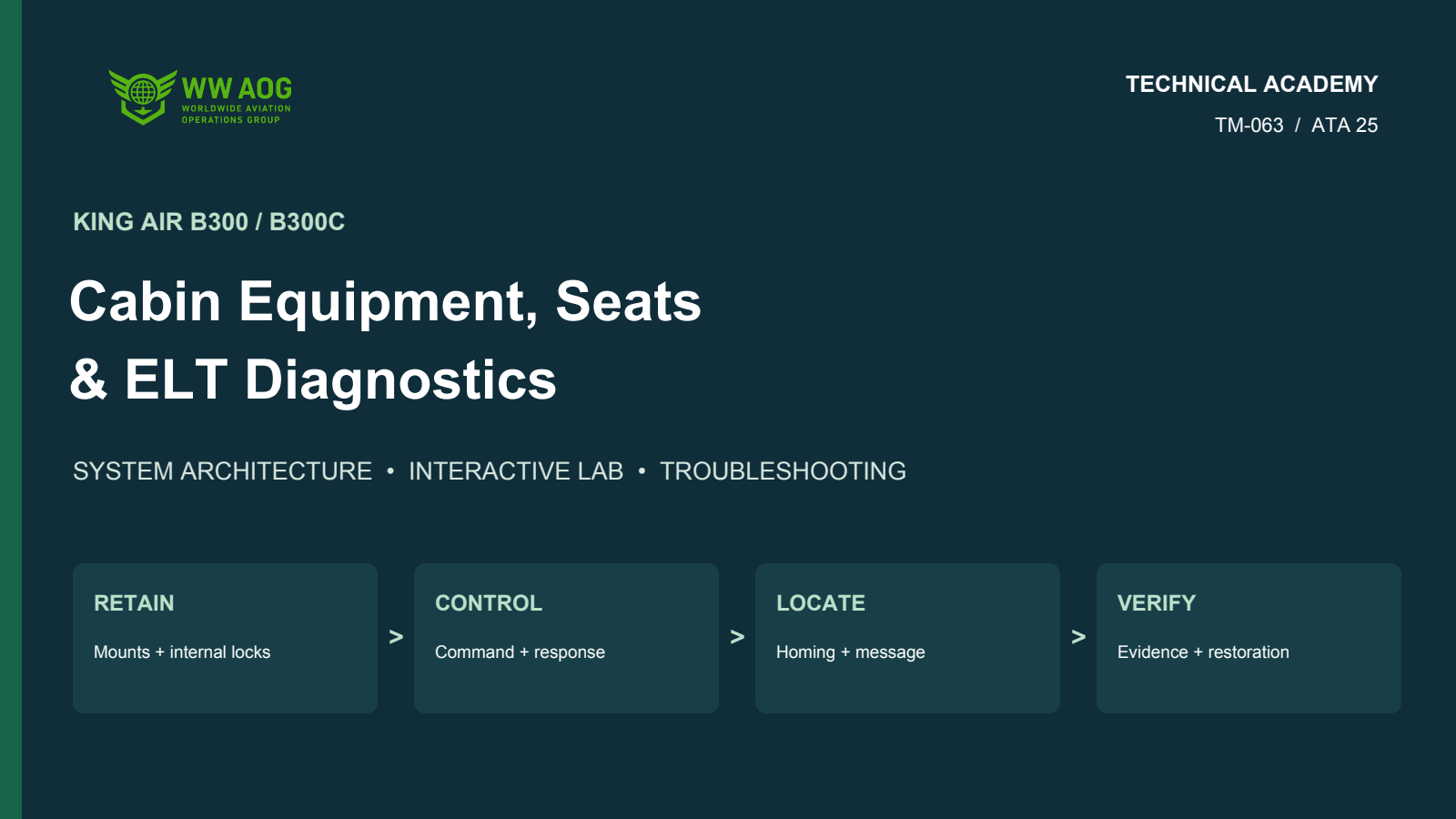
Understand crew and passenger-seat service interfaces, locking, recliner and swivel mechanisms, attachment and restraint boundaries. Relate a numerical comparison to the actual installed mechanism and task.
C406-N locator architecture
Trace ELT power, control, antenna and indication paths. Interpret applicable flash-code evidence and short-test records while distinguishing indication from proven transmission and respecting model-specific test boundaries.
Practice, evidence and assessment
Eight lessons, six prediction-and-Apply exercises, eight two-stage cases and twelve independent decisions support the separate 40-question final. A referenced 26-page handbook supports the interactive workbench.
Learning outcomes
- Explain seat locking, adjustment and restraint interfaces.
- Compare torque evidence at the identified task point.
- Trace C406-N power, control, antenna and indication paths.
- Support a handover using physical and functional evidence.
Aircraft and course applicability
B300/B300C Fusion cabin equipment and seat mechanisms described in the supplied chapter, with the Artex C406-N ELT. Seat suppliers, optional interiors and other ELT models require their own applicable data. Study sources: Textron 434-590169-0009, supplied B300/B300C Fusion Chapter 25, pages dated 1 May 2018; ARTEX C406-N/C406-N HM manual 570-5060 Rev W, pp.31,38,40-41, for the specifically identified supplier comparisons.
WWAOG provides independent training. Online completion records knowledge and simulation achievement; it does not replace observed practical qualification, employer authorization or applicable licensing. Use current aircraft-effective maintenance instructions for physical work.