What you will study
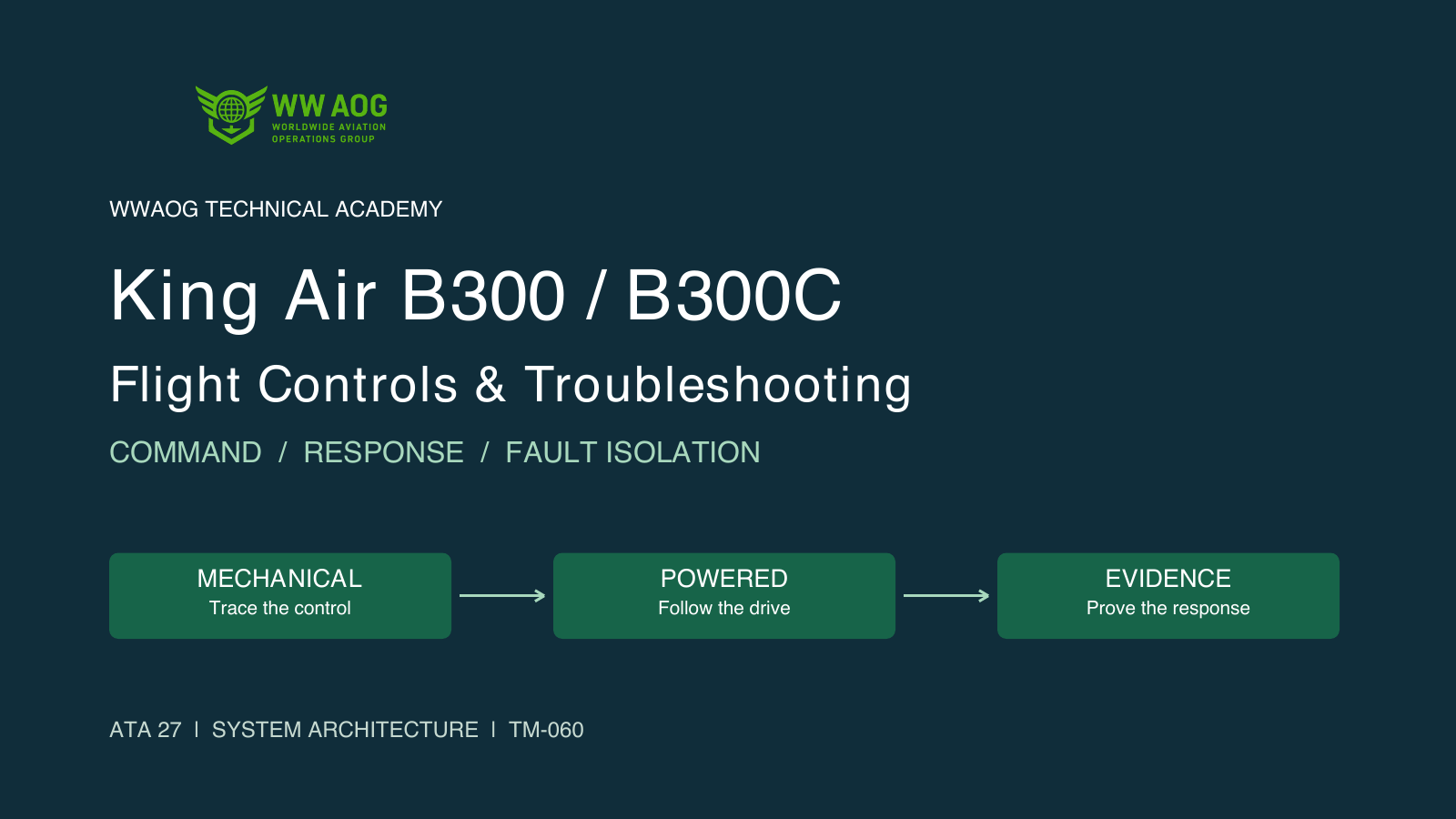
Command, transmission and surface response
Trace primary mechanical control paths and trim mechanisms. Relate neutral, tension and trim to the response being investigated, keeping indication and protective action separate from actual surface movement.
Powered functions and interfaces
Study the four-panel flap drive and Fusion rudder-boost inputs, including configuration-specific rudder and stall-warning relationships. Compare the command, signal and resulting response before assigning a fault boundary.
Diagnostic practice
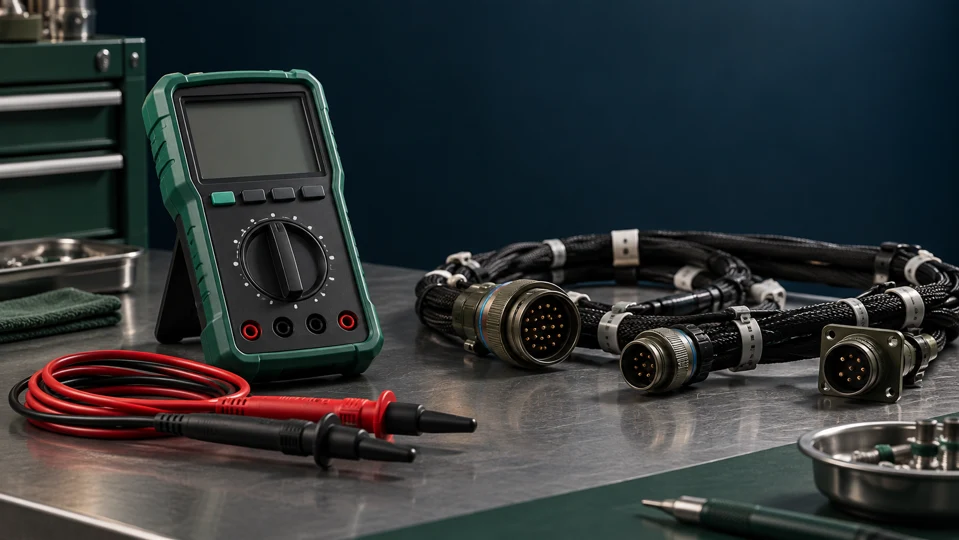
Practise directional torque and rudder-boost transducer measurements, six system predictions and 12 diagnostic cases. A 30-page handbook supports the workbench and independent review; the separate final contains 40 questions.
Learning outcomes
- Trace the primary control and trim architecture.
- Explain the flap-drive and rudder-boost relationships within scope.
- Interpret directional force and transducer evidence.
- Identify missing proof before concluding that a fault is corrected.
Aircraft and course applicability
The supplied King Air B300/B300C Fusion flight-control configuration. Technical study references include Textron 434-590169-0009 ATA 27 pages dated 1 May 2018.
WWAOG provides independent training. Online completion records knowledge and simulation achievement; it does not replace observed practical qualification, employer authorization or applicable licensing. Use current aircraft-effective maintenance instructions for physical work.