What you will study
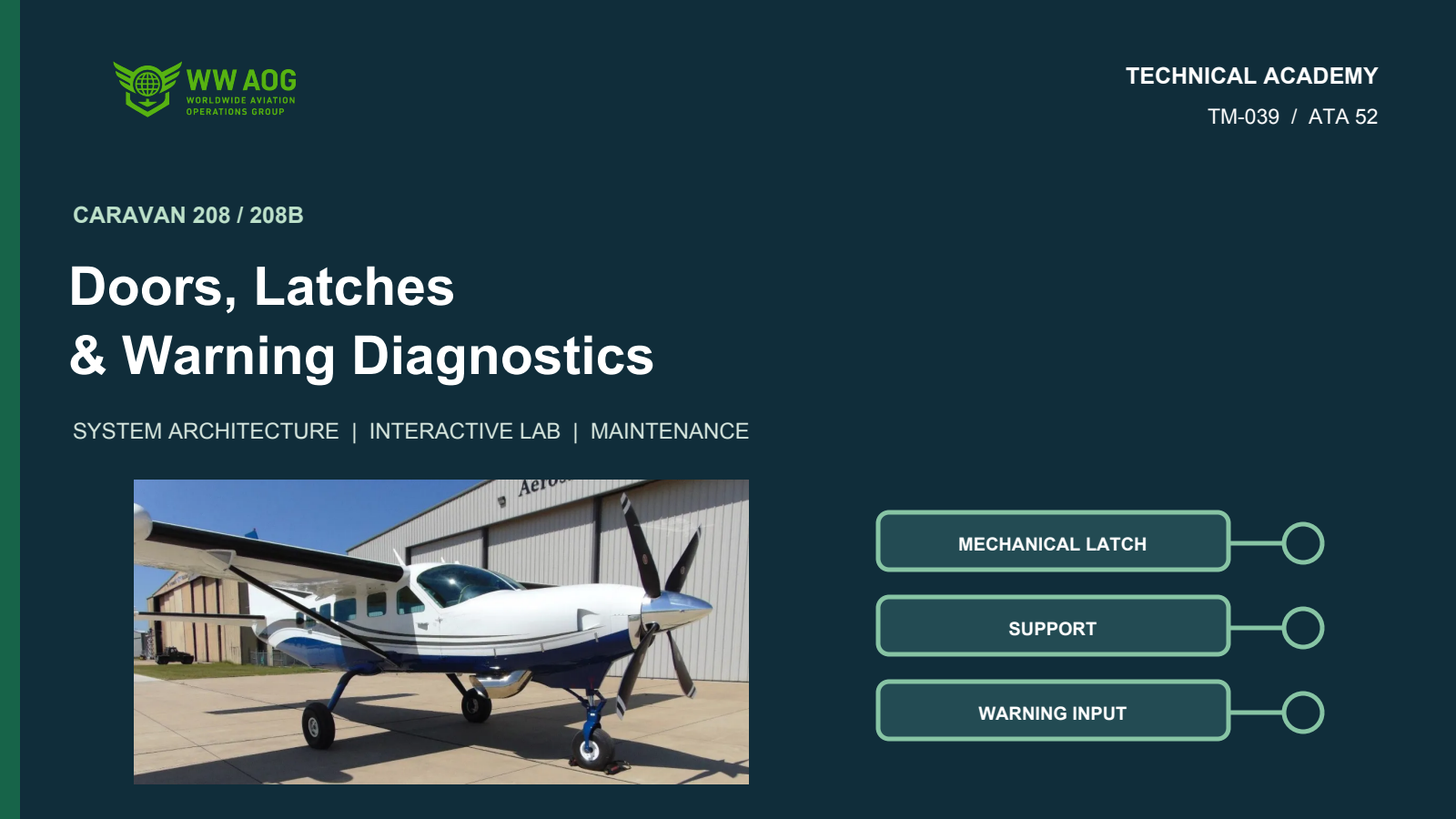
Connected door architecture
Trace crew, passenger and cargo handles, spindles, bellcranks, pushrods and latch pins. Explain gas-spring lift, lower-door damping and restraint-cable support. Distinguish conventional warning, identified NXi CMC inputs and optional roll-up drive.
Geometry, inspections and restoration
Interpret skin gap, outer-rail-to-pin projection and handle release force with their separate setup and measurement origins. Preserve mechanical, structure, support and warning findings through complete correction and repeat proof.
Practice, evidence and assessment
Eight lessons, six prediction-and-Apply exercises, eight two-stage cases, a required measurement bench and twelve independent decisions provide 24 lab completion requirements. A separate 40-question final requires 80%; all activities are required for the completion certificate.
Learning outcomes
- Explain how handles and mechanical interfaces secure the identified door.
- Distinguish support, damping, warning coverage and optional roll-up dependencies.
- Interpret task-specific skin gap, pin projection and release-force evidence.
- Build a complete restored-door handover with separate retained findings.
Aircraft and course applicability
Model 208/208B crew, passenger and cargo doors in supplied D2078 Chapter 52. Distinguish conventional annunciation, the identified NXi software/CMC branch and optional roll-up equipment. Aircraft serial, actual installation and complete effective tasks select the work. Cessna Model 208 Maintenance Manual D2078, supplied Revision 42; Chapter 52 effective-page list 1 May 2024. Door geometry tasks October 2022/June 2015; warning/optional-drive pages retain their listed dates.
WWAOG provides independent training. Online completion records knowledge and simulation achievement; it does not replace observed practical qualification, employer authorization or applicable licensing. Use current aircraft-effective maintenance instructions for physical work.