What you will study
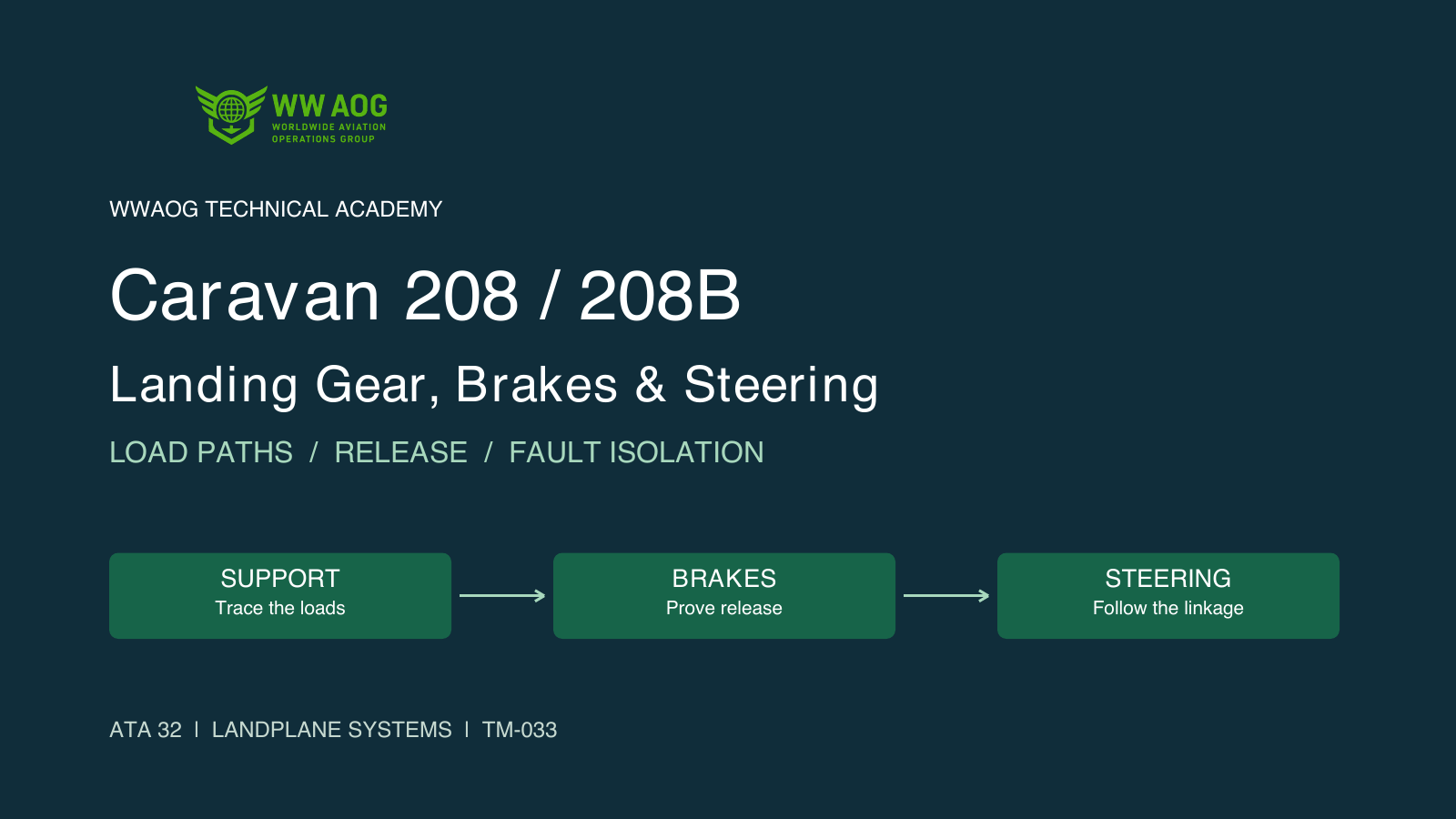
Gear and ground-load paths
Trace support through tires, wheels, bearings and spring attachments. Connect the load path with the condition being inspected instead of treating each part as an isolated component.
Braking, release and steering
Follow pedal input into hydraulic pressure and wheel-brake friction, then consider the release path. Study nose support, steering neutral and shimmy damping to distinguish drag, wear and steering symptoms.
Measurement-led decisions
Use tire and brake measurement benches with six prediction-and-Apply exercises and 12 diagnostic cases. A 30-page handbook, independent review and 40-question final support a repeatable evidence-based approach.
Learning outcomes
- Explain the landplane gear load path.
- Trace hydraulic brake application and release.
- Connect steering and shimmy symptoms to the relevant system.
- Interpret simulated tire-pressure and brake-wear evidence.
Aircraft and course applicability
Landplane Cessna 208/208B and Grand Caravan EX architecture, with identified model differences. Float and modified installations require their own applicable data. Study source: Cessna D2078-42-13, Revision 42, 1 June 2024, ATA 32.
WWAOG provides independent training. Online completion records knowledge and simulation achievement; it does not replace observed practical qualification, employer authorization or applicable licensing. Use current aircraft-effective maintenance instructions for physical work.