King Air 200/B200 Propeller Systems and Maintenance Diagnostics
Find the real paired torque, propeller-RPM, ITT and N1 indicators before tracing governing, beta feedback, overspeed protection, autofeather and Type I/Type II synchrophasing. The 49-page handbook and three visual views support ten lesson decisions, ten paired cases and three independent measured jobs, followed by a separate 40-question final at 80%.
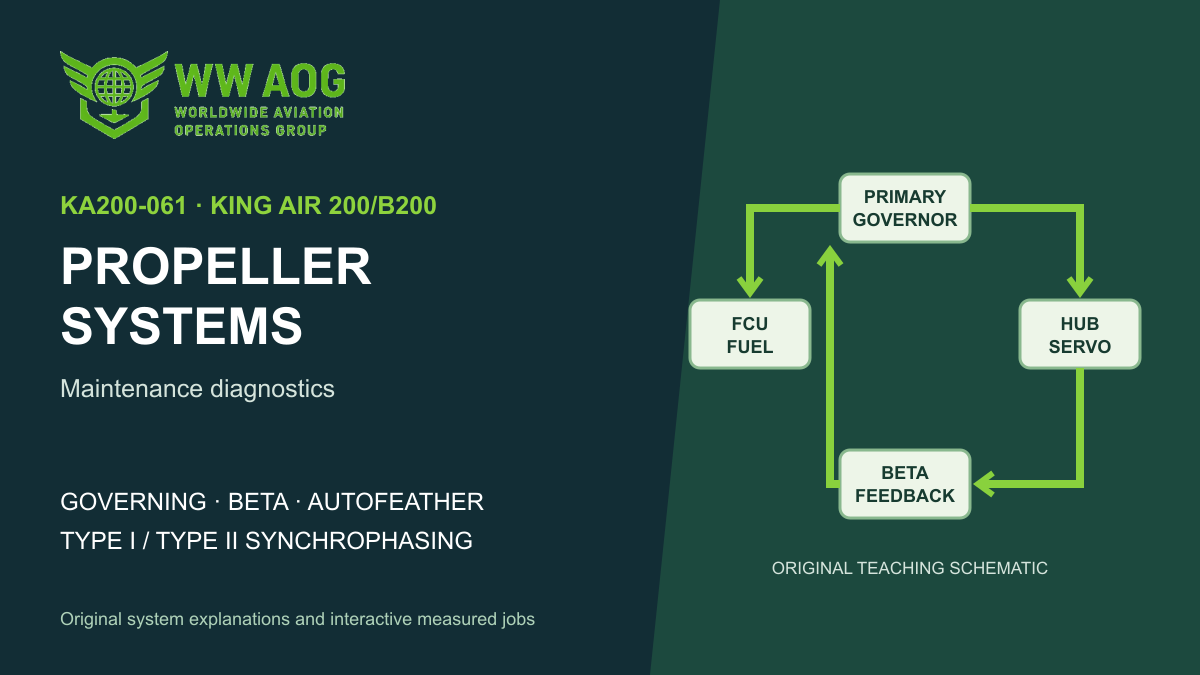
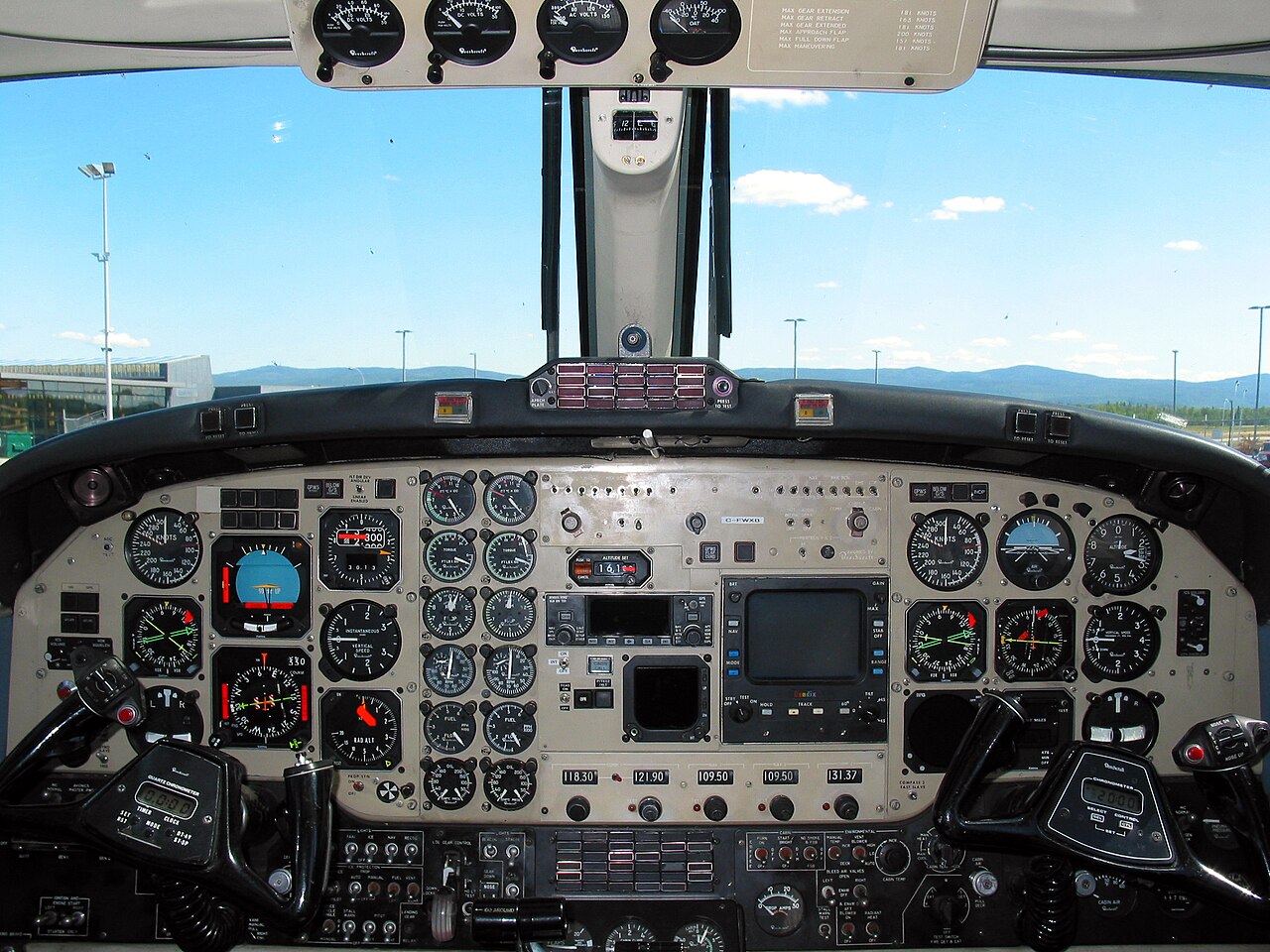
Locate paired TORQUE, PROPELLER RPM, ITT and gas-generator % RPM indicators in the real conventional King Air cockpit photograph. Keep each quantity separate before interpreting the supplied governing or autofeather record. Follow governor pilot-valve oil control, hub servo, counterweights/spring, beta rods/ring and the carbon-block/reversing-lever feedback. Distinguish the pneumatic FCU fuel-topping path.
Installed propeller maintenance
Compare named three-blade, McCauley four-blade and Hartzell four-blade installation stages, carbon-block geometry and service boundaries. Keep governing detent, high stop, feather and overspeed reset as separate tests.
Autofeather and measured balance
Read the opposite-engine arming interlock and affected K2/dump response. Classify same-RPM two-power vibration records and distinguish chart correction from tracking/propeller-shop assessment.
Type I and Type II synchrophasing
Trace right-side actuator/shaft/trimmer versus dual electrical governor commands. Read connector-specific winding tests, following-range widths and oscilloscope waveform evidence.
Learning outcomes
Identify the installed propeller and actual synchrophaser branch before applying a measurement.
Predict governor oil, blade-pitch and RPM correction directions.
Distinguish a successful command or indication from the physical oil, blade or governor response.
Record an evidence-based isolation, task restoration and repeated original functional check.
Aircraft and course applicability
Systems and maintenance-record training for the identified King Air 200/B200 propeller installations in Maintenance Manual 101-590010-19 Chapter 61, supplied effective-page list November 1, 2024. Propeller make/model, aircraft serial, installed modifications and synchrophaser connector branch select the task. The supplied study edition does not establish current aircraft applicability; physical work uses current controlled instructions, qualified personnel and required equipment.
WWAOG provides independent training. Online completion records knowledge and simulation achievement; it does not replace observed practical qualification, employer authorization or applicable licensing. Use current aircraft-effective maintenance instructions for physical work.
Before you enroll
Is this course suitable for my aircraft or role?
Systems and maintenance-record training for the identified King Air 200/B200 propeller installations in Maintenance Manual 101-590010-19 Chapter 61, supplied effective-page list November 1, 2024. Propeller make/model, aircraft serial, installed modifications and synchrophaser connector branch select the task. The supplied study edition does not establish current aircraft applicability; physical work uses current controlled instructions, qualified personnel and required equipment. If you are choosing training for a different installation or a team, email info@wwaog.com with your aircraft configuration, learner experience and training goals.
Where do I find the price and sign up?
Open the KA200-061 enrollment page for the current price, course contents and signup options. Enrollment takes place in WWAOG Academy, where learners access their assigned content.
Can WWAOG train our team at our location?
Yes. Tailored on-site training is available by separate arrangement. Describe your aircraft, location, team size and learning objectives so WWAOG can propose an appropriate scope.
KA200-061 · Start with the real cockpit
Find propeller RPM, torque and engine speed on the real panel
Four different measurements appear in the paired engine-instrument columns. Locate the actual indicators before comparing a supplied governor or autofeather record. A photographed pointer position is not one of the measured training records, and none of these gauges is a linkage-adjustment control.
“King Air 200 Panel (219959284).jpg” by Shawn, via Wikimedia Commons. CC BY-SA 2.0. Wikimedia 1280 px thumbnail; no local image edits. Interactive labels by WWAOG. The photograph and labeled photo view are licensed under CC BY-SA 2.0; assessment text remains separate. No photographer or manufacturer endorsement is implied.
Find it in the photograph, then read its action, purpose and connection to the rest of the system. You can also choose a named item in the list. Keyboard users can use Tab and Enter or Space.
A conventional King Air 200 cockpit example identified by its source. The photograph does not establish the installed PT6A model, propeller make, serial effectivity or maintenance limits. Use the course configuration and the applicable task for every numerical check; do not derive a limit from a photographed arc.
This guided photo activity explains the visible equipment. Selecting a label does not operate an aircraft control or record course completion. Continue with the system diagram and supplied fault record to practice troubleshooting.
Free course sample · KA200-061
Learn the relationship. Test your reasoning.
Try a short teaching exercise from the subject of King Air 200/B200 Propeller Systems and Maintenance Diagnostics. No account needed.
About 2 minutes
01 · Understand
In B200 autofeather, a falling right torque high-pressure event extinguishes the opposite left green arming light and disarms that side. The affected right low-pressure event then enables K2 and the right dump solenoid. Oil relief permits the right propeller to feather. These are separate indications, commands and physical responses.
Follow the affected engine and the opposite-engine interlock
Right high event → left arming light out→
Right low event → right K2/dump command→
Actual oil relief → right blade feather response
02 · Read the supplied record
A fictional B200 right-side TEST records left arming-light extinction at 425 ft-lb. At 270 ft-lb, the right low-switch/K2 command and voltage at the right dump input are verified, but oil pressure does not decay and the right blades do not feather. The applicable B200 event bands are 410 ±50 and 260 ±50 ft-lb.
Original public teaching example based on the course’s published scope. Supplied records and values are training data. Aircraft maintenance uses current applicable instructions; this sample does not record course completion.
Our aircraft systems courses use manufacturer technical manuals to support pilots and maintenance personnel working in FAA- and EASA-regulated aviation. Training combines detailed system explanations, knowledge checks and interactive exercises for initial familiarization and recurrent study.
Training at your location
Your aircraft. Your team. A course built around both.
WWAOG offers tailored on-site courses for operators, maintenance organizations and government teams. We can shape the course around your aircraft configuration, installed systems, technician experience and operational training goals.
Tell us what your team needs
Aircraft model and equipment configuration
Location, group size and technician experience
System topics and desired learning outcomes
Preferred dates and available training resources
We’ll agree the scope, delivery plan and quotation before scheduling. Tailored on-site training is arranged separately from individual online course enrollment.
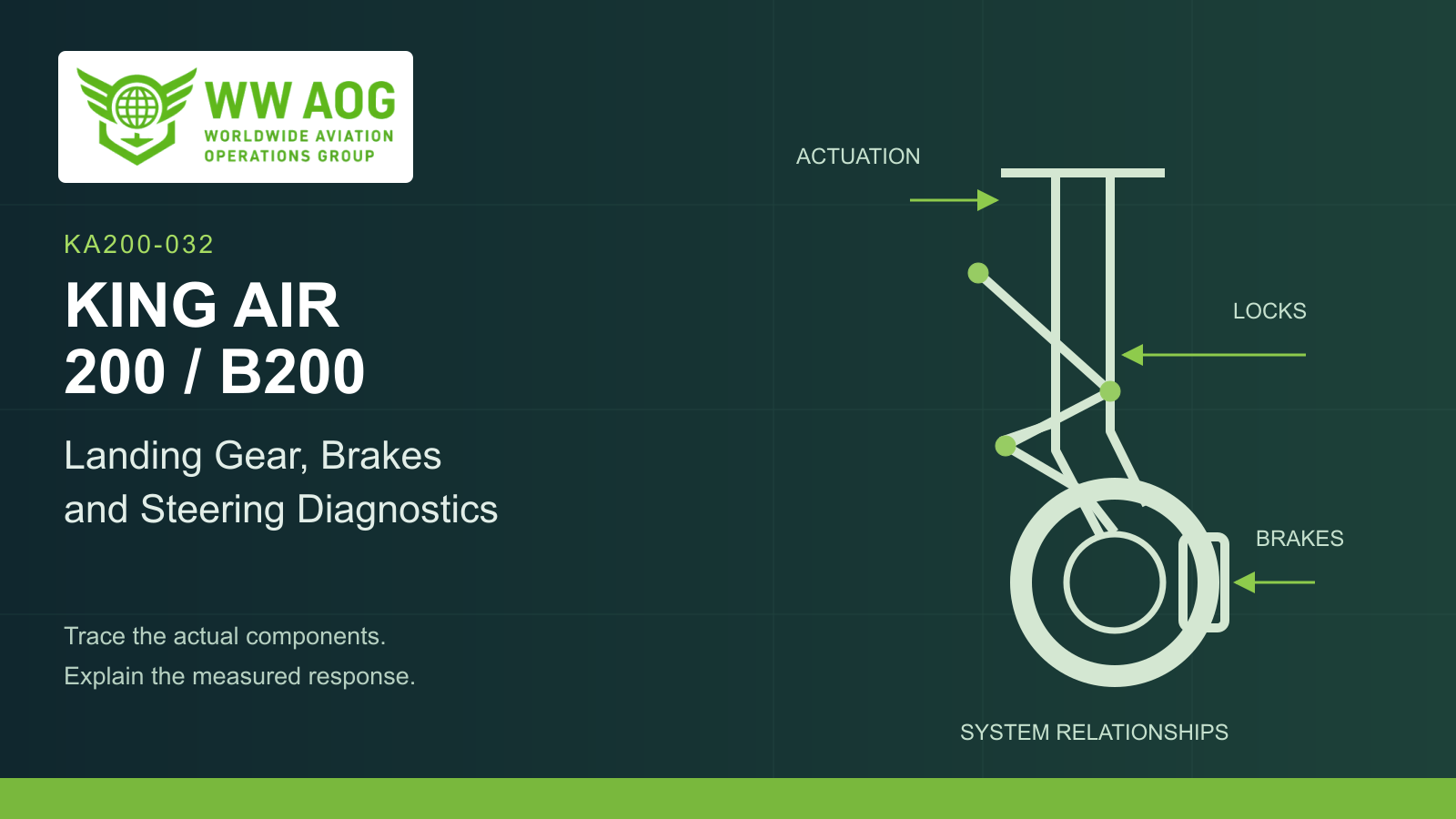
Trace the gear drive, identify the physical lock and compare the actual hydraulic, electrical or mechanical response. Learn why a passing lamp, switch or pressure test can leave the original fault unresolved. A 47-page handbook and clickable mechanical/hydraulic gear, brake and steering schematics connect ten lesson decisions, ten paired cases and three independent five-field jobs. Includes a separate 40-question final at 80%.
Follow engine P3 bleed air through the flow-control units, wing heat exchangers and cabin ducts, then connect inflow, outflow-valve regulation and vapor-cycle cooling. A 46-page handbook, interactive system diagram, ten lesson decisions, twelve paired fault cases and a six-field maintenance job build configuration-specific fault isolation. Includes a separate 40-question final at 80%.
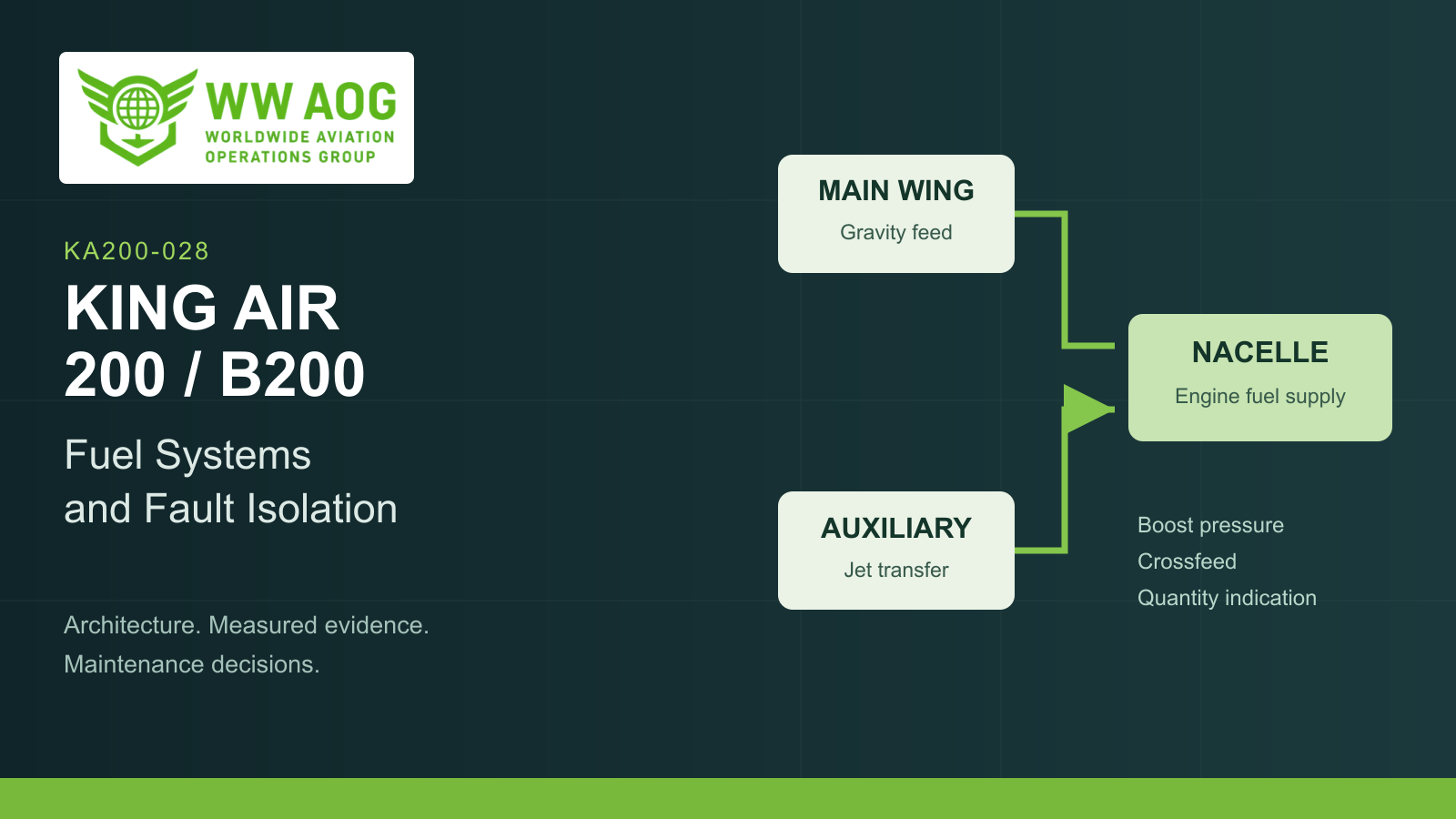
Trace main-wing gravity feed, auxiliary jet-pump transfer, standby boost and crossfeed using the actual King Air 200/B200 component names. A 35-page handbook, interactive fuel schematic, ten two-part fault cases and three measured work records connect system operation to a defensible diagnosis. Includes a separate 40-question final at 80%.