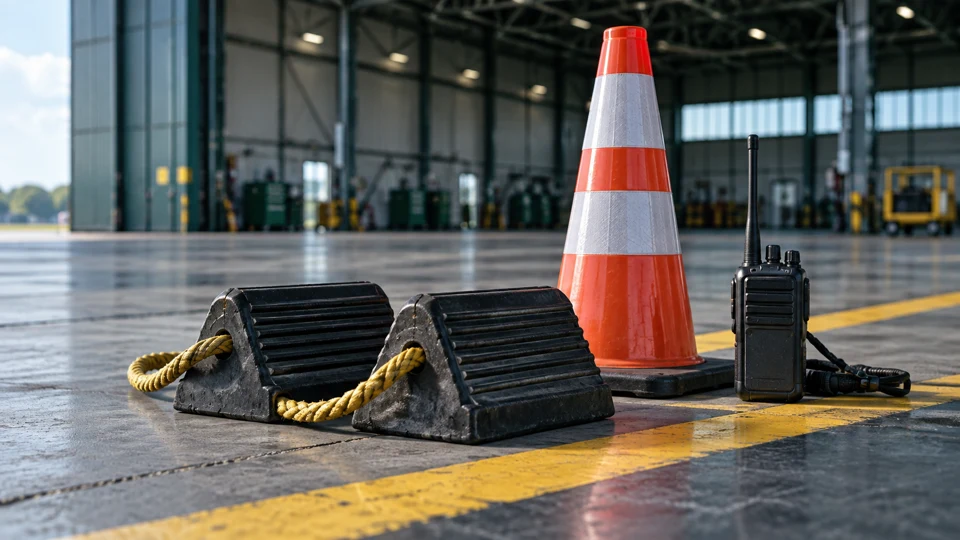
Start with TM-002 Flight Line Safety & Ramp Operations and TM-003 FOD Prevention & Control. These online courses address aircraft-area hazards, ground-team awareness and FOD controls. Broader human-factors and organization-specific training can be discussed as a tailored program.
Study flight-line safety and ramp decisions with the 49-page Rev K handbook, six visual exercises and 48 knowledge cases. Complete both Mastery series, each requiring at least 80% of first-response points and zero critical misses, then pass the separate 50-question final at 80% with at least 40 correct. Practical task qualification is assessed separately.
Study FOD source control, tool accountability, inspection evidence and accepted handover with the 45-page Rev G handbook, eight visual exercises, 32 knowledge cases, two Mastery series and a separate 60-question final.
Strengthen the everyday practices that support maintenance quality
Available online: flight-line safety and FOD prevention. Build awareness of aircraft hazards, servicing risks, tool accountability and reporting; discuss wider human-factors training for your team.
FOD, tool control and ground support
TM-002 and TM-003 bring together flight-line hazard awareness, foreign object debris prevention, tool accountability and work around aircraft and ground support equipment. These topics share a practical purpose: making maintenance work easier to control and verify. Learners connect individual actions with the wider responsibilities of the maintenance team, including clear communication when work is handed over.
Human performance and maintenance records
For a tailored team program, discuss risks in how work is understood, communicated and documented. WWAOG can scope instruction around your maintenance records, quality practices, handovers and inspection responsibilities. Agree the content separately from the published TM-002 and TM-003 online courses.
Learning outcomes
Apply FOD and tool-control practices
Recognize common human-factor risks
Use maintenance documentation and independent inspection correctly
Operate around aircraft and support equipment safely
Communicate and record maintenance actions clearly
Choosing the right training scope
Bring the team's training objectives and the roles involved in maintenance, inspection and supervision. For an organization program, discuss how the course outcomes relate to existing FOD, tool-control, documentation and recurrent-training practices.
WWAOG provides independent training. Course completion does not replace aircraft-specific maintenance data, employer authorization or applicable licensing requirements.
Study aircraft marshalling knowledge with the 27-page Rev H handbook, 49 FAA source depictions and 24 cases with 96 decisions. Signal recognition and operational reasoning are assessed separately; practical handling qualification is arranged separately.
Study the listed Caravan systems, older and EX engine-control rigging, G1000 avionics, inspection planning and structural assessment, then connect the findings in an integrated maintenance-diagnostics capstone. Review each course for the applicable engine, equipment and study scope.
Your aircraft. Your team. A course built around both.
WWAOG offers tailored on-site courses for operators, maintenance organizations and government teams. We can shape the course around your aircraft configuration, installed systems, technician experience and operational training goals.
Tell us what your team needs
Aircraft model and equipment configuration
Location, group size and technician experience
System topics and desired learning outcomes
Preferred dates and available training resources
We’ll agree the scope, delivery plan and quotation before scheduling. Tailored on-site training is arranged separately from individual online course enrollment.