What you will study
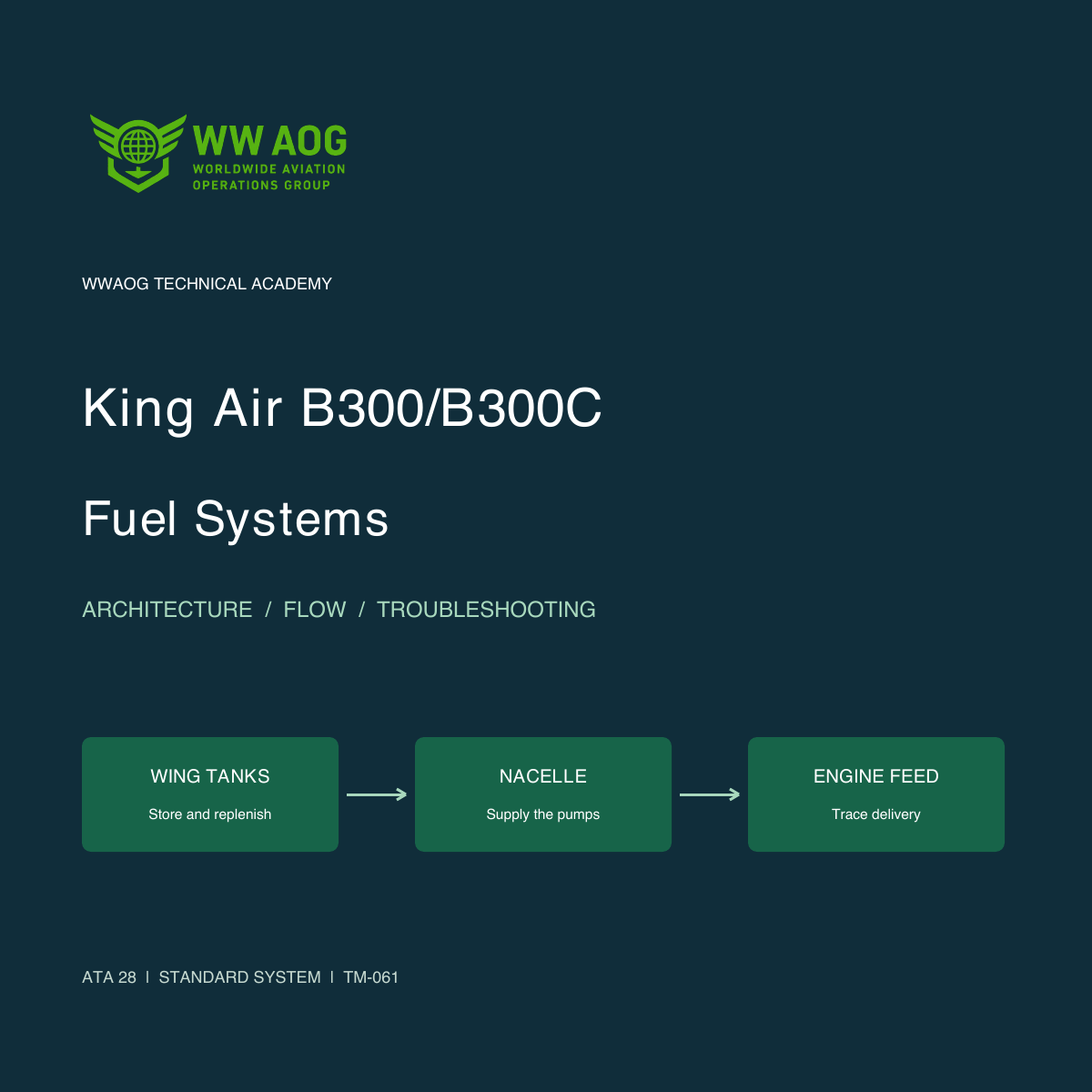
Main, nacelle and auxiliary fuel paths
Trace each main storage group to its nacelle, engine-feed and auxiliary-transfer paths. Connect gravity feed, venting, normal boost and standby supply to the conditions needed for reliable replenishment.
Crossfeed and quantity evidence
Separate crossfeed from tank-to-tank transfer. Distinguish capacitance quantity sensing from independent low-level detection so the displayed quantity and warning evidence are interpreted in context.
Interactive fault isolation
Six flow exercises, a quantity workbench and 12 diagnostic cases support system understanding. The published course includes a 30-page handbook, independent review and separate 40-question final.
Learning outcomes
- Trace main, nacelle and auxiliary fuel supply.
- Explain boost, standby and crossfeed functions.
- Distinguish quantity indication from independent low-level sensing.
- Identify configuration and restoration evidence needed for a diagnostic conclusion.
Aircraft and course applicability
Standard King Air B300/B300C fuel installation. ER/CER equipment requires its own applicable instructions; this course does not establish coverage of every extended-range configuration.
WWAOG provides independent training. Online completion records knowledge and simulation achievement; it does not replace observed practical qualification, employer authorization or applicable licensing. Use current aircraft-effective maintenance instructions for physical work.