What you will study
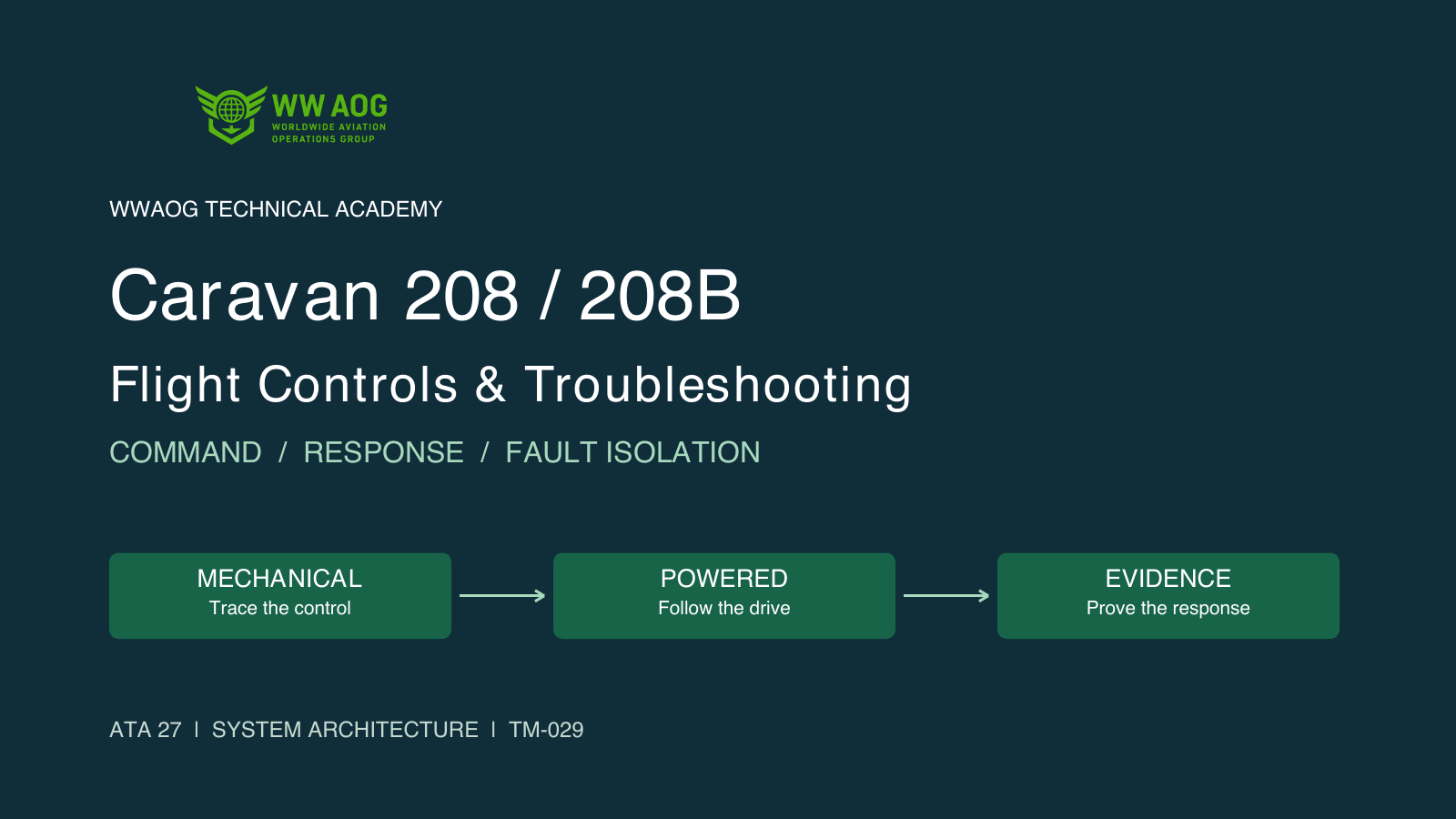
Mechanical controls and trim
Follow aileron and spoiler loops, elevator and rudder transmission, and trim mechanisms. Connect control input, transmission and surface movement so a symptom can be assigned to the relevant part of the control path.
Normal and standby flap operation
Compare the normal and standby motor logic around the shared flap actuator. Distinguish feedback indications from actual flap travel, and account for the aircraft configuration before choosing a check.
Measurements and fault isolation
Use trim-tab free-play and flap-travel benches alongside six prediction-and-Apply exercises and 12 diagnostic cases. An independent review and separate 40-question final test how you interpret evidence and justify the next decision.
Learning outcomes
- Trace input through the primary control and trim paths.
- Explain normal and standby flap functions for the stated configuration.
- Interpret simulated free-play and travel measurements.
- Separate indication faults from physical response and identify the proof needed after correction.
Aircraft and course applicability
Caravan 208/208B flight-control architecture, with identified earlier-aircraft and Grand Caravan EX differences. The study baseline is the supplied Cessna D2078 Revision 42, dated 1 June 2024.
WWAOG provides independent training. Online completion records knowledge and simulation achievement; it does not replace observed practical qualification, employer authorization or applicable licensing. Use current aircraft-effective maintenance instructions for physical work.