What you will study
Radio, audio and microphone paths
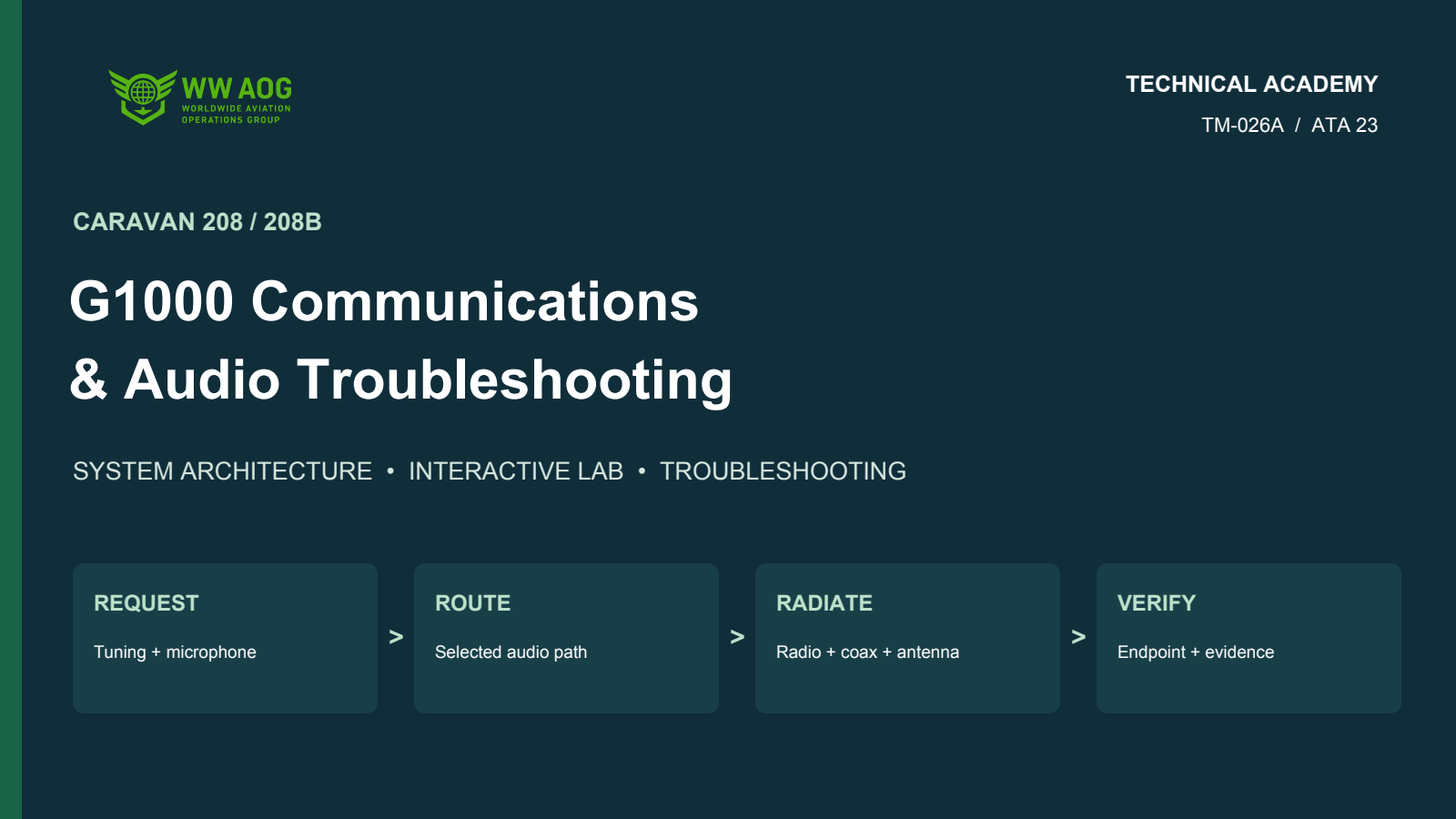
Trace GIA radio functions, GMA source selection, microphone and PTT paths, headset and speaker outputs. Compare pilot, copilot and handheld-microphone evidence before assigning a fault to a shared or station-specific path.
Reception, transmission and RF evidence
Connect antenna paths and interference boundaries with the observed symptom. Distinguish tuning indications from usable radio-frequency performance and account for GMA 1347 versus 1360D installation differences.
Interactive diagnostic decisions
Eight lessons, six prediction-and-Apply exercises and eight two-stage cases include station-specific fallback reception and path-specific static-discharge comparisons. A 26-page handbook supports the workbench, twelve independent decisions and separate 40-question final.
Learning outcomes
- Trace radio, audio-selection and microphone/PTT signal paths.
- Separate station-specific audio faults from radio or antenna evidence.
- Identify installed-equipment differences before selecting maintenance tasks.
- Use reception, transmission and interference evidence to justify the next diagnostic step.
Aircraft and course applicability
Cessna 208/208B Garmin G1000 installations with GIA 63W/64W and GMA 1347/1360D. Confirm software, audio-panel count and modification effectivity. Earlier Sperry/King radios and optional HF require separate tasks. Study source: supplied Cessna D2078 Revision 42, 1 June 2024, ATA 23.
WWAOG provides independent training. Online completion records knowledge and simulation achievement; it does not replace observed practical qualification, employer authorization or applicable licensing. Use current aircraft-effective maintenance instructions for physical work.