What you will study
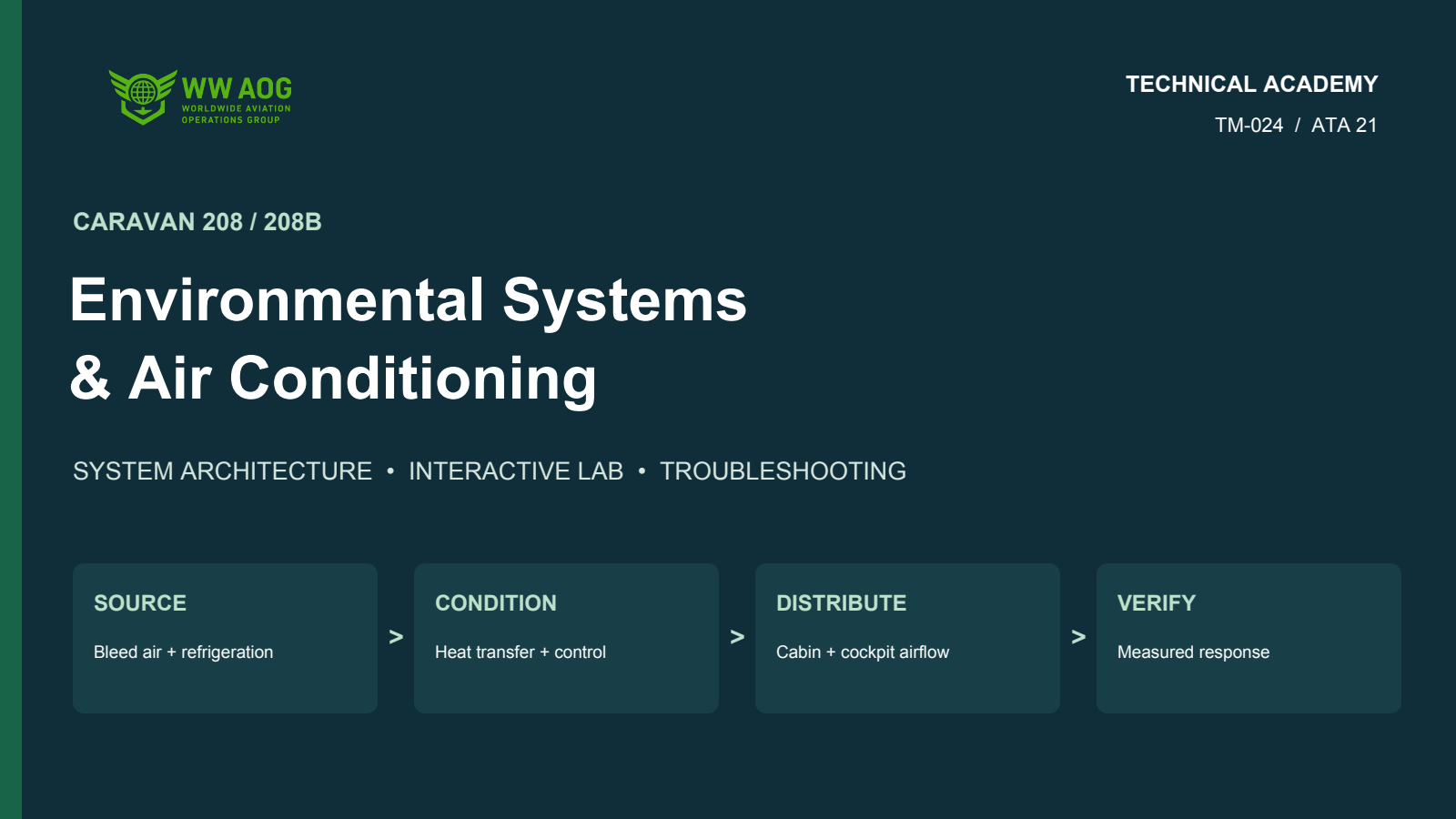
Heating, ventilation and distribution
Trace fresh-air intake, P3 heating, mixing, isolation, defrost and outlet routing. Explain why a healthy neighboring pneumatic branch does not establish heater control or delivered cabin heat.
Installed air conditioning
Follow refrigerant circulation, evaporator airflow and control permissions. Identify the aircraft and installed equipment before selecting drive, refrigerant or servicing instructions; compare airflow faults with refrigeration faults.
Evidence and diagnostic practice
Eight lessons, six prediction-and-Apply exercises, eight two-stage cases and twelve independent decisions connect architecture to fault isolation. A 25-page handbook supports the lab and separate 40-question final.
Learning outcomes
- Trace heating, ventilation and cooling as connected but distinct paths.
- Identify installation differences before choosing maintenance data.
- Separate control permission from actual airflow and temperature response.
- Use diagnostic evidence to justify checks and restoration proof.
Aircraft and course applicability
Caravan 208/208B environmental architecture with identified PT6A-114/-114A and PT6A-140 R134a installation differences. Study source: supplied Cessna D2078 Revision 42, June 2024, ATA 21. Earlier refrigerant installations require their own applicable tasks.
WWAOG provides independent training. Online completion records knowledge and simulation achievement; it does not replace observed practical qualification, employer authorization or applicable licensing. Use current aircraft-effective maintenance instructions for physical work.