What you will study
Fluid supply and surface distribution
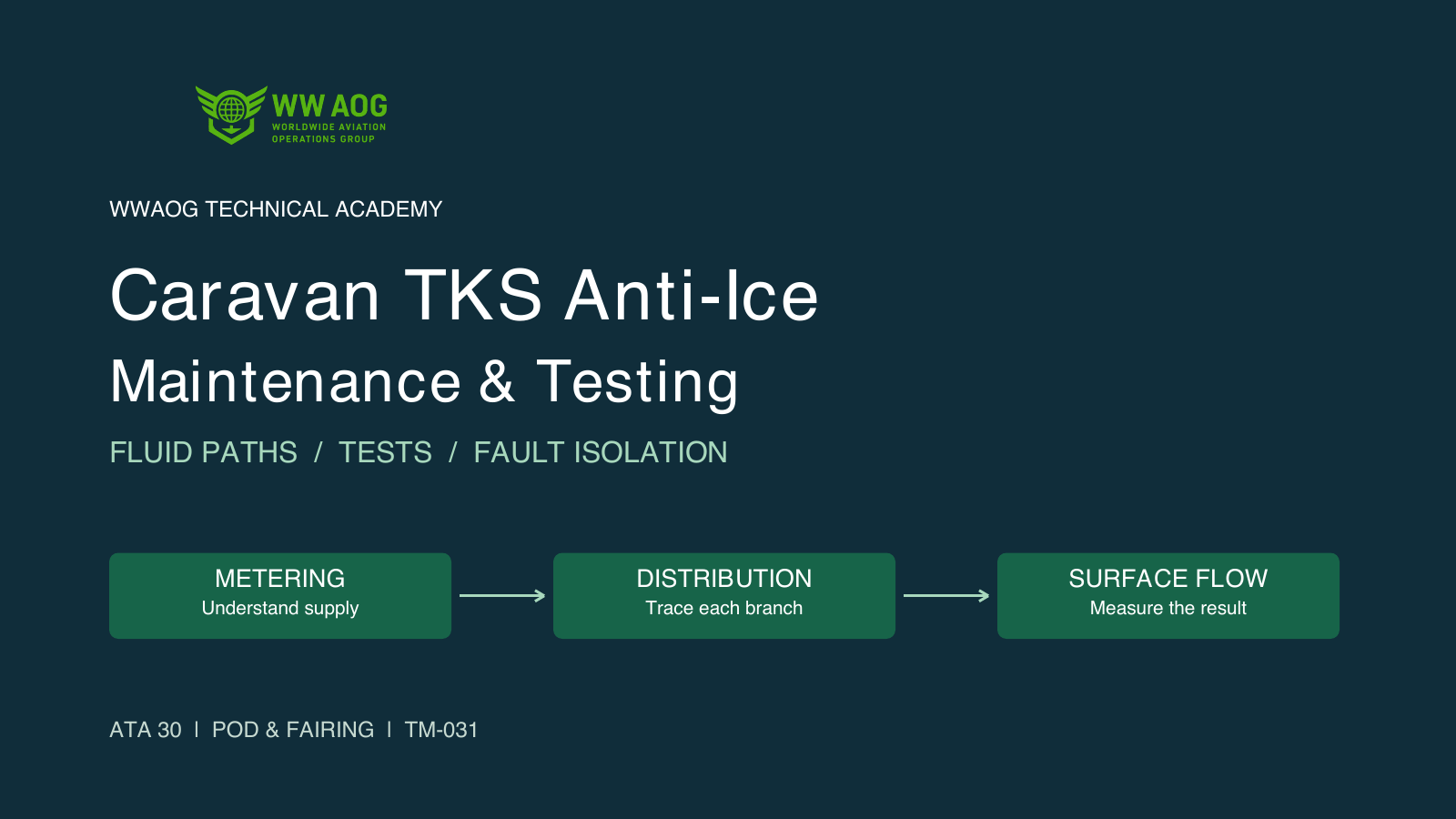
Trace tank supply through metering pumps, filters and calibrated distribution to porous panels and the propeller. Relate each stage to its purpose and to the observations available during a fault investigation.
Windshield, backup and indication paths
Connect the separate windshield circuit, electrical backup and system indications. Distinguish cargo-pod and fairing installations before comparing a training example with the aircraft being supported.
Pressure, flow and panel wetting
Use filter and paired-flow measurement benches, six system predictions and 12 diagnostic cases. A 30-page handbook supports the interactive explorer, independent review and separate 40-question final.
Learning outcomes
- Trace TKS fluid from storage to the protected surfaces.
- Explain the separate windshield and backup functions.
- Interpret simulated pressure and flow comparisons.
- Use installation and fault evidence to justify the next check.
Aircraft and course applicability
Applicable Caravan TKS cargo-pod and fairing installations. Study examples reference Cessna D2078-42-13 Revision 42, June 2024, ATA 30; installation differences remain part of course selection.
WWAOG provides independent training. Online completion records knowledge and simulation achievement; it does not replace observed practical qualification, employer authorization or applicable licensing. Use current aircraft-effective maintenance instructions for physical work.