WW AOG — Worldwide Aviation Operations GroupView course & enroll ↗
SK408-032 · Cessna SkyCourier 408

Cessna SkyCourier Landing Gear, Brakes and Steering Diagnostics

Locate the main and nose struts, wheel protection, brake reservoir and master cylinders, parking-brake valve and SC001 switch, steering cables and bungee, high-float friction device and two WOW paths. Explain how the named parts work before interpreting a complaint. Compare shimmy-damper depth, brake wear, switch travel, cable readings and phase-qualified friction-device gaps with their stated task conditions. Includes a 54-page illustrated handbook, 10 lessons, 10 visual workshop views, 10 paired cases, three complete work records and a separate 40-question final examination.

Self-paced onlineWWAOG Technical Academy
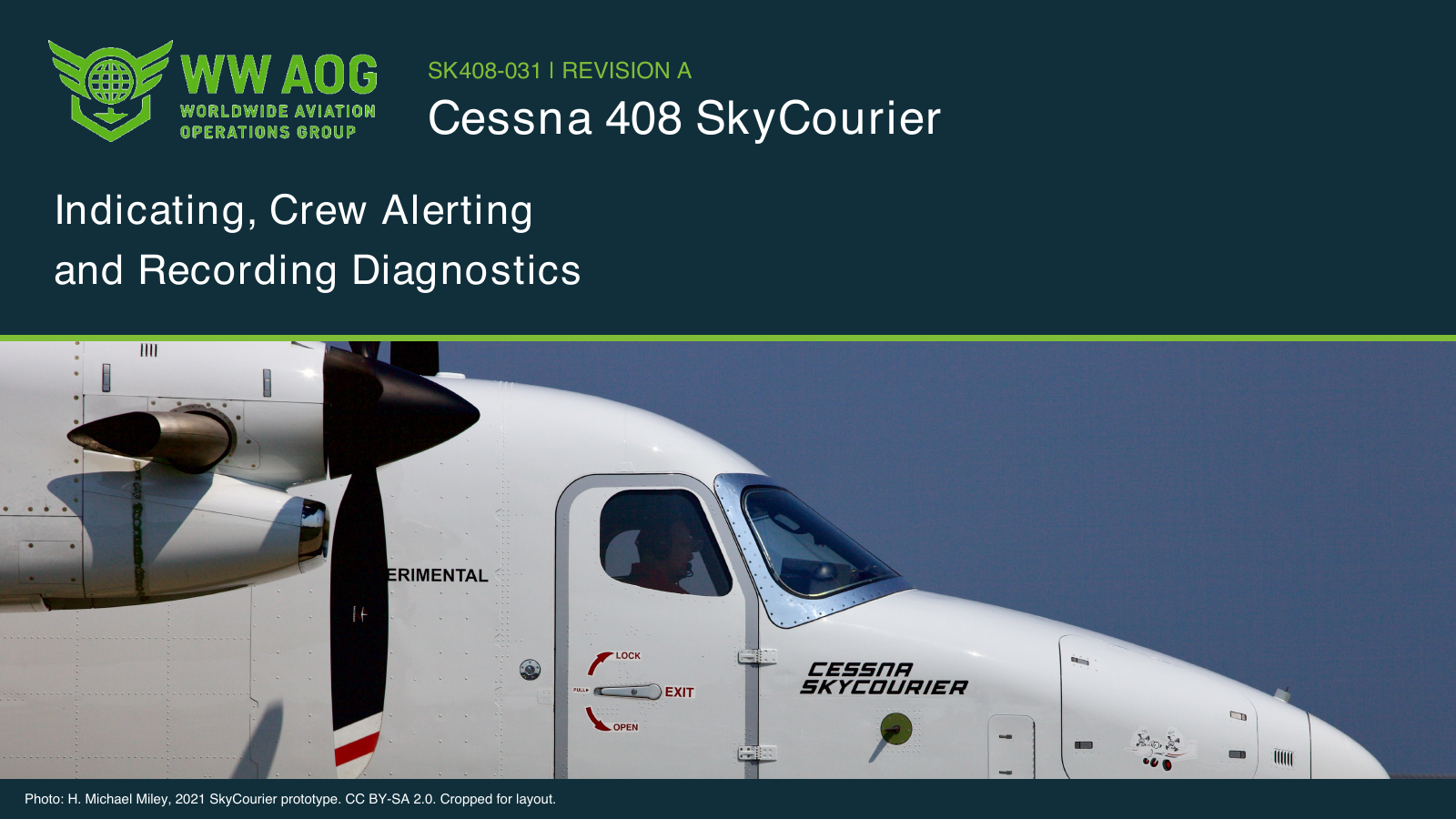
Cessna SkyCourier Landing Gear, Brakes and Steering Diagnostics course cover

Photo: H. Michael Miley. 2021 SkyCourier prototype photograph for aircraft context; it does not identify a production installation or its fitted gear and lighting options. View photograph source · CC BY-SA 2.0. Cropped for this WWAOG course layout. The selected crop excludes registration markings and other aircraft. No aircraft geometry altered.

Inside SK408-032

What you will study

Find the gear, brake and steering equipment

Locate the main and nose struts, brake reservoir and master cylinders, parking-brake valve and SC001 switch, steering cables and bungee, and the installed high-float friction device.

Follow pedal, knob and cable movement

Connect pedal force with the main brakes and follow the parking-brake knob and cable to the valve. Distinguish SC001 position indication from separate brake-pressure proof.

Compare each named maintenance observation

Keep task setup with shimmy-damper depth, brake-wear, SC001 switch-travel, cable-tension and phase-qualified friction-device gap readings. A passing observation does not replace a separate missing or out-of-range check.

Separate installed gear options and WOW paths

Identify standard or high-float equipment before applying its stated task. Keep physical strut/cam position, the switch input and a WOW MISCOMPARE indication distinct.

Complete the supported learning path

Use the 54-page illustrated handbook, 10 lessons and 10 visual workshop views with 28 named component cards. Complete 10 paired cases and three five-field work records before the separate 40-question final examination.

Learning outcomes

  • Connect each cockpit input with the physical wheel, strut or switch that it affects.
  • Distinguish shock absorption, torque-link movement and a structural finding.
  • Locate the nitrogen and fluid chambers, then interpret a named make-up-piston measurement.
  • Separate hot-brake protection, overinflation protection and actual wheel/tire condition.
  • Follow pedal force to each main brake and preserve the parking-brake condition used for wear inspection.
  • Explain the knob, cable, SC001 switch and white/amber indications without treating a message as hydraulic proof.
  • Connect rudder pedals, cables, bungee and gearshaft, then keep temperature and setup with a cable-tension reading.
  • Separate the added friction device from the hydraulic damper and retain its spring-loading and safety sequence.
  • Separate physical strut/cam position, switch input and the meaning of WOW MISCOMPARE.
  • Keep each pedal, leak check, color/state observation and returned connector with the correct task.

Aircraft and course applicability

Cessna Model 408 maintenance-system training for the identified main/nose gear, wheels, brakes, parking-brake controls, mechanical steering, optional high-float friction device and WOW installation. Supplied 408MM13, book date August 1, 2026; Chapter 32 LEP May 1, 2026. Individual tasks retain their own dates. Standard/high-float equipment is distinguished. The lessons interpret named inspections and supplied records; they are not an aircraft jacking, towing, brake overhaul or universal physical-adjustment procedure. Actual maintenance uses the complete current aircraft-effective instructions, wheel/tire and component publications, applicable WDM and qualified personnel.

WWAOG provides independent training. Online completion records knowledge and simulation achievement; it does not replace observed practical qualification, employer authorization or applicable licensing. Use current aircraft-effective maintenance instructions for physical work.
Before you enroll

Is this course suitable for my aircraft or role?

Cessna Model 408 maintenance-system training for the identified main/nose gear, wheels, brakes, parking-brake controls, mechanical steering, optional high-float friction device and WOW installation. Supplied 408MM13, book date August 1, 2026; Chapter 32 LEP May 1, 2026. Individual tasks retain their own dates. Standard/high-float equipment is distinguished. The lessons interpret named inspections and supplied records; they are not an aircraft jacking, towing, brake overhaul or universal physical-adjustment procedure. Actual maintenance uses the complete current aircraft-effective instructions, wheel/tire and component publications, applicable WDM and qualified personnel. If you are choosing training for a different installation or a team, email info@wwaog.com with your aircraft configuration, learner experience and training goals.

Where do I find the price and sign up?

Open the SK408-032 enrollment page for the current price, course contents and signup options. Enrollment takes place in WWAOG Academy, where learners access their assigned content.

Can WWAOG train our team at our location?

Yes. Tailored on-site training is available by separate arrangement. Describe your aircraft, location, team size and learning objectives so WWAOG can propose an appropriate scope.

Free course sample · SK408-032

Learn the relationship. Test your reasoning.

Try a short teaching exercise from the subject of Cessna SkyCourier Landing Gear, Brakes and Steering Diagnostics. No account needed.

About 2 minutes
01 · Understand

The SkyCourier parking-brake knob below the left side of the cockpit pedestal moves a cable to the parking-brake valve. SC001, adjacent to that valve, changes the indication with mechanism position; it does not measure brake pressure. The named slow full-travel installation check requires white-message actuation at 0.25 ± 0.10 inch, or 0.15–0.35 inch, with retention through full pull and extinction on stowing. Pressure verification is separate. Study reference: supplied 408MM 32-42-15 pp 401–404.

Separate switch actuation travel from hydraulic-pressure proof
  1. Parking-brake knob and cable move the valve mechanism and adjacent SC001 switch
  2. White message first appears at 0.40 inch versus the stated 0.15–0.35-inch actuation range
  3. Later on/off behavior and separate brake-pressure verification remain distinct findings
02 · Read the supplied record

The SC001 installation record uses the specified slow full-travel pull. With the knob stowed, the white message is off. It first comes on at 0.40 inch, stays on through full travel and goes off on stowing. Brake-pressure verification is unrecorded.

03 · Make a decisionFor this SC001 parking-brake position-switch check, which interpretation preserves all recorded findings?

Original public teaching example based on the course’s published scope. Supplied records and values are training data. Aircraft maintenance uses current applicable instructions; this sample does not record course completion.

Explore more free course samplesReview SK408-032 and enroll ↗

Regional standards and support

Our aircraft systems courses use manufacturer technical manuals to support pilots and maintenance personnel working in FAA- and EASA-regulated aviation. Training combines detailed system explanations, knowledge checks and interactive exercises for initial familiarization and recurrent study.

Training at your location

Your aircraft. Your team. A course built around both.

WWAOG offers tailored on-site courses for operators, maintenance organizations and government teams. We can shape the course around your aircraft configuration, installed systems, technician experience and operational training goals.

Tell us what your team needs

  • Aircraft model and equipment configuration
  • Location, group size and technician experience
  • System topics and desired learning outcomes
  • Preferred dates and available training resources

We’ll agree the scope, delivery plan and quotation before scheduling. Tailored on-site training is arranged separately from individual online course enrollment.

Request tailored on-site training
SK408-032 · Self-paced learning

Build knowledge you can apply to better maintenance decisions.