What you will study
Establish what is actually being weighed
Reconcile the baseline, installed equipment, oil and fuel definition. Connect calibrated suitable scales, specified leveling and stable readings to the gross or already-net tare basis before calculating reactions.
Calculate from reactions and signed changes
Use one datum and consistent units to calculate moments and CG. Update both totals for additions, removals and relocations, and distinguish raw moments from indexed moments.
Follow each loading and fuel condition
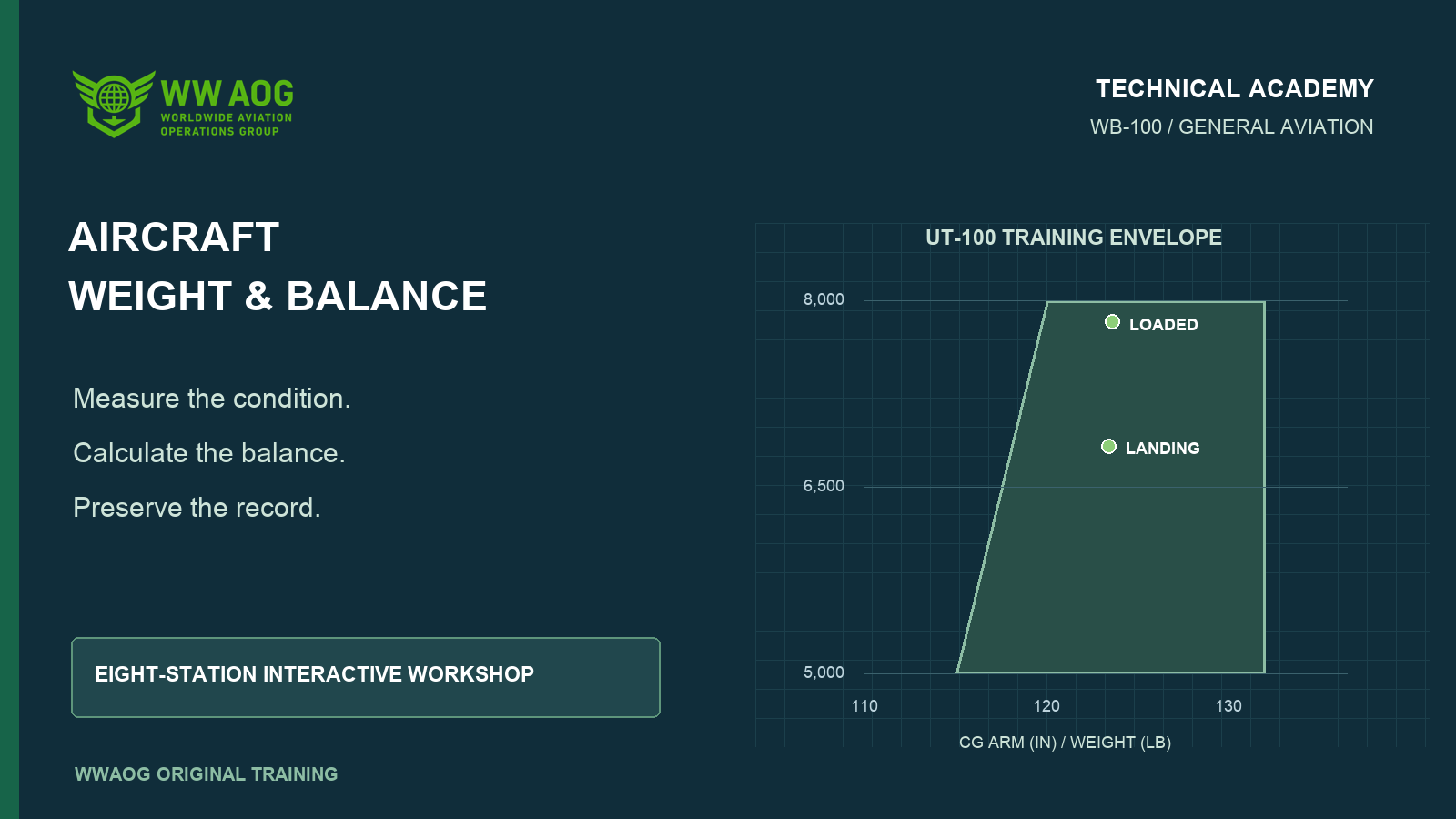
Check total weight, individual compartment limits and the forward boundary at the actual weight. Remove fuel weight and moment together and evaluate the specified intermediate states rather than relying on two endpoints.
Verify the conversion and preserve the record
Use supplied MAC and LEMAC values for percent-MAC conversion. Diagnose incorrect worksheets, preserve the current baseline and distinguish established physical work from a planned calculation in the final handoff.
Learning outcomes
- Establish the correct aircraft baseline, installed-equipment and fluid condition, then explain the required weighing setup and gross or net reading basis.
- Calculate net reactions, signed moments and CG using consistent units and datum references; update the baseline for additions, removals and relocations.
- Evaluate loading, compartment limits and weight-dependent CG boundaries, and recalculate weight and moment through the specified fuel states.
- Convert between CG arm and percent MAC, diagnose suspect worksheets and prepare a record that distinguishes verified configuration from a planned calculation.
Aircraft and course applicability
General aircraft weighing, calculation and record foundations using FAA material and an identified Caravan leveling example. UT-100 is an original fictional training aircraft; its arms, fuel model, fluid definition and limits are exercise data. Actual Caravan, King Air or other aircraft work requires its current applicable weighing and loading instructions, actual configuration, qualified equipment, hands-on checks and authorized records process.
WWAOG provides independent training. Online completion records knowledge and simulation achievement; it does not replace observed practical qualification, employer authorization or applicable licensing. Use current aircraft-effective maintenance instructions for physical work.