What you will study
Detection architecture and warning evidence
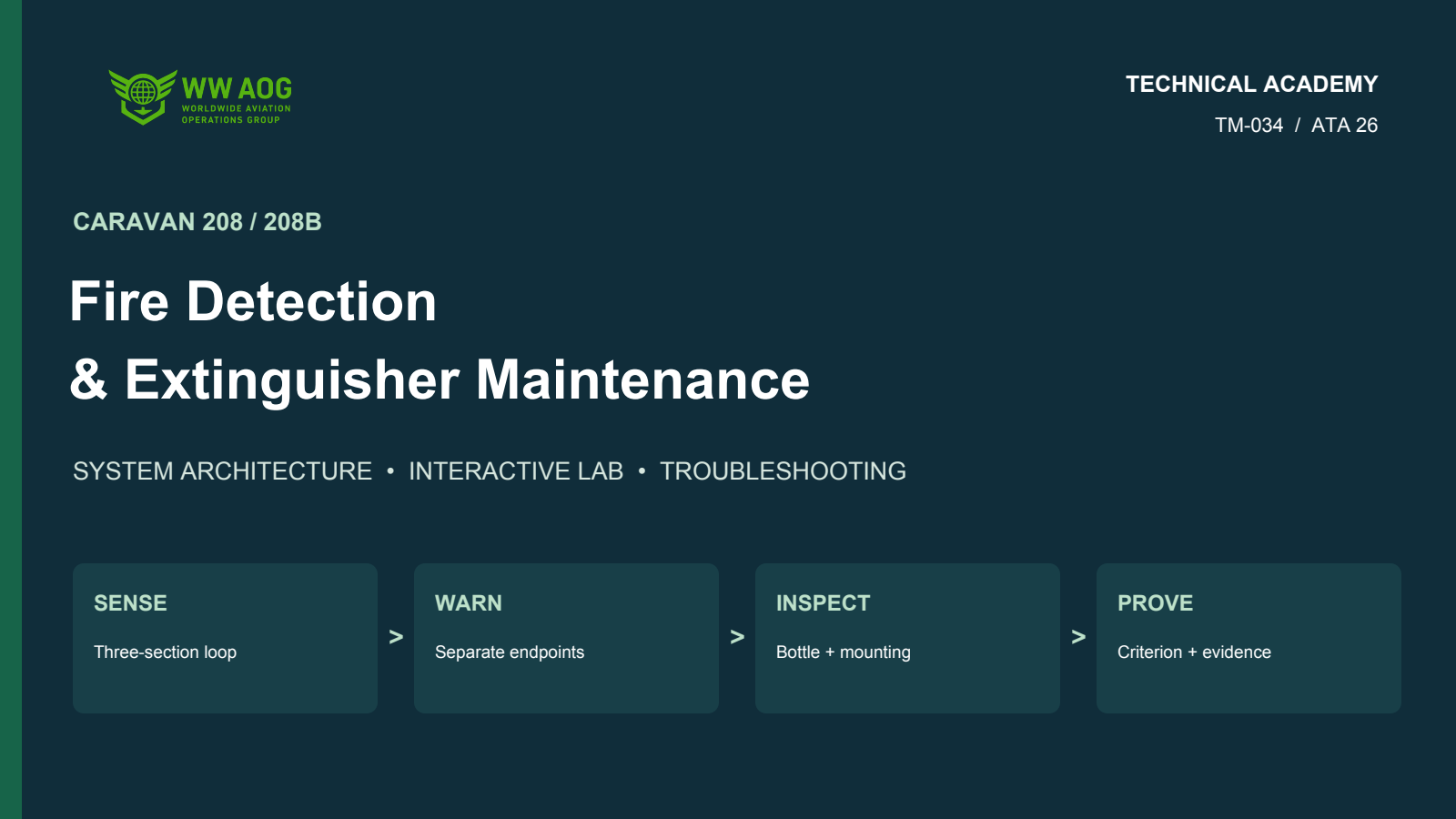
Trace the three-section engine sensing loop and warning paths. Distinguish annunciator, CAS and applicable NXi maintenance-history branches, and investigate asymmetric warning failures.
Sensing installation and portable equipment
Connect routing and physical loop protection to system integrity. Compare portable-extinguisher charge evidence against the identified placard, and separate detector performance from equipment availability.
Practice, evidence and assessment
Eight lessons, six prediction-and-Apply exercises, eight two-stage cases and twelve independent decisions support the separate 40-question final. A referenced 26-page handbook supports the interactive workbench.
Learning outcomes
- Explain the sensing loop and warning paths.
- Interpret TEST and warning evidence without an unsupported component verdict.
- Compare physical loop and portable-extinguisher evidence.
- Document restoration and outstanding service requirements.
Aircraft and course applicability
Cessna 208/208B three-section engine fire detection and the described portable Halon 1211 installation. Distinguishes annunciator, CAS and later NXi CMC effectivity; modified detection systems or alternative extinguishers require their applicable data. Study source: Cessna D2078 Model 208 Maintenance Manual, supplied Revision 42, 1 June 2024; ATA 26. Individual task pages retain their printed effective dates.
WWAOG provides independent training. Online completion records knowledge and simulation achievement; it does not replace observed practical qualification, employer authorization or applicable licensing. Use current aircraft-effective maintenance instructions for physical work.