WW AOG — Worldwide Aviation Operations GroupView course & enroll ↗
C208EX-PILOT · Pilot systems

Grand Caravan EX | Pilot Systems & Cockpit Awareness

Understand the Grand Caravan EX PT6A-140/G1000 systems from the fuel path to cockpit indications. Eight modules, a study handbook and an interactive lab connect 76 system sections, 77 component explorations and 24 paired cases with 48 formative questions. Finish with a separate 40-question final at 80%. Systems ground study; operating qualification remains separate.

Self-paced onlineWWAOG Technical Academy
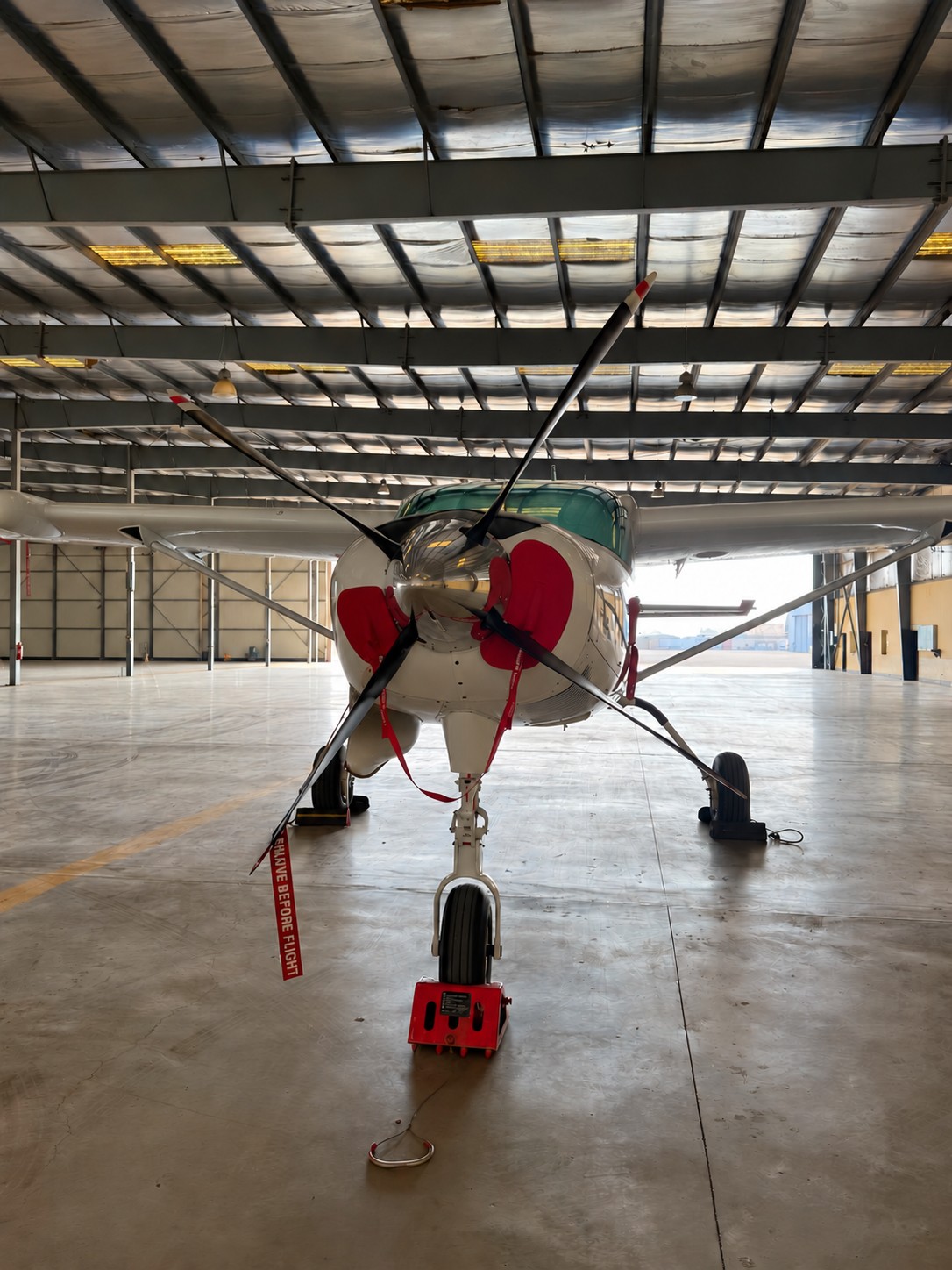
Grand Caravan EX with a McCauley four-blade propeller — aircraft configuration example
McCauley four-blade example. Historical quantitative examples retain the course’s stated three-blade Hartzell source configuration.
Free interactive pilot learning sample

Fuel supply and metered engine flow

Fuel in a wing, a running pump, supply pressure and metered engine fuel flow describe different parts of the system. Select a component to see its role, then use those relationships to interpret a supplied record.

Worldwide Aviation Operations Group

Historical study source: POH/AFM 208BPHCUS-01, Revision 1, May 22, 2013, with its matched checklist. This sample follows the Grand Caravan EX landplane, Model 208B 867 SHP, PT6A-140, Garmin G1000 and three-blade Hartzell study branch. Grand Caravan EX equipment varies. A PT6A-140 EX may have a McCauley four-blade propeller, and some EX airplanes have a 28-volt, 300 A starter-generator. The numerical 2013 POH examples retain their named Hartzell three-blade study baseline; they are not four-blade performance data. Match the installed equipment and its condition-dependent limits to the aircraft’s approved documents. Use matching aircraft records and supplements. Actual operation uses current approved documents and appropriate pilot training.

Select a component. Follow the relationship.

Fuel reservoir

The reservoir maintains fuel around the ejector and electric auxiliary pump inlets.

Wing fuel must reach this reservoir before these pumps can use it. Reservoir-level warning and wing quantity concern different locations.

  • Wing selector-controlled valves → gravity feed → reservoir
  • Reservoir → ejector or electric auxiliary pump → reservoir manifold
  • Supply-pressure warning and metered engine-flow indication monitor different parts of the path

Supplied aircraft record

Supplied Grand Caravan EX ground record: the engine is not rotating, STARTER is OFF, both wing selectors are ON, FUEL CONDITION is at CUTOFF and FUEL BOOST is ON. Read this as a checklist snapshot, not a sequence to perform on an airplane.

The electric pump is selected ON while the engine remains stopped and fuel condition remains at CUTOFF. Predict the fuel indication set before revealing the recorded values.

1 · Predict before the revealFor this Caravan EX pre-starter CUTOFF snapshot, which indication set matches the three fuel checks in the matched battery-start checklist?
Study references
  • POH/AFM, printed 7-76 (physical PDF 540): wing tanks and gravity feed.
  • POH/AFM, printed 7-77 (physical PDF 541): reservoir and pump supply roles.
  • POH/AFM, Figure 7-10, printed 7-78 (physical PDF 542): separate supply and metered-flow paths.
  • POH/AFM, printed 7-80 (physical PDF 544): selector-controlled valves.
  • POH/AFM, printed 7-82 (physical PDF 546): auxiliary pump and motive-flow functions.
  • POH/AFM, printed 7-83 (physical PDF 547): fuel-flow measurement downstream of the fuel control unit.
  • POH/AFM, printed 7-85 (physical PDF 549): separate pump, pressure and reservoir messages.
  • POH/AFM, printed 4-23 (physical PDF 241): preceding fuel-condition CUTOFF context.
  • POH/AFM, printed 4-24 (physical PDF 242): the supplied three-indication pre-starter snapshot.
  • Matched normal checklist 208BCLCNPUS-01, printed 17 (physical PDF 23): preceding selectors and CUTOFF context.
  • Matched normal checklist 208BCLCNPUS-01, printed 18 (physical PDF 24): the same pre-starter fuel checks.
Inside C208EX-PILOT

What you will study

Your ground-study learning path

8 modules · 76 system sections · 77 component explorations · 24 paired cases · 48 formative questions.

Use the handbook and component maps to understand each system, make a prediction before revealing the supplied result, and explain the evidence. Complete every component exploration and all 24 supported case interpretations. The separate 40-question final requires 80% (32 correct). The course completion certificate follows the handbook, lab and final requirements.

00 · Know the airplane and its operating documents

Identify the EX engine, propeller, avionics and serial branch. Understand how a POH, effective-page information, supplements and matched abbreviated checklists relate to the actual aircraft before applying a system explanation.

01 · Fuel from the wings to the engine

Trace wing supply to the reservoir and engine. Distinguish tank-selector roles, motive-flow ejector delivery, electric boost support and separate quantity, pressure and reservoir-level indications.

02 · Engine, propeller and power indications

Connect the PT6A-140 gas and shaft paths to governing and propeller pitch. Distinguish torque, gas-generator speed, propeller speed and interstage turbine temperature by their origins and their roles in cockpit awareness.

03 · Electrical power and essential indications

Follow sources, contactors, protected distribution and loads. Separate a selected source from an available current path, and distinguish bus voltage, generator contribution and battery current in supplied records.

04 · Flight controls, flaps, landing gear and brakes

Trace primary control and trim paths, flap command versus actual surface position, fixed landing-gear load paths, hydraulic braking, parking hold and nose steering. Keep the indication and the physical mechanism distinct.

05 · G1000 information, navigation and flight guidance

Separate displays from their data sources. Compare reversion, selected navigation information, attitude/heading inputs, audio support and flight-guidance capability without treating a surviving display as proof of every connected function.

06A · Air data and ice protection

Map left and right pressure sources, shared standby dependencies, alternate static, heater-current warnings and different warning inputs. Study engine-inlet separation and the optional cargo-pod TKS fluid, pump and indication paths; pneumatic wing boots are not merged into this installation.

06B · Cabin air, defrosting and optional oxygen

Separate hot-bleed admission, mixing, distribution, ram ventilation and the standby vacuum branch. Where installed, distinguish air conditioning airflow from refrigeration, and oxygen cylinder pressure from regulator action, local hose flow and capacity-specific duration-chart inputs.

Learning outcomes

  • Trace the named component paths behind cockpit functions and indications.
  • Explain how a shared upstream source can affect multiple displays or consumers.
  • Distinguish a control selection, component availability and a supplied observed result.
  • Interpret new system records using the stated aircraft and installed-option branch.
  • Identify what a local indication establishes and what requires separate evidence.
  • Keep systems ground-study achievement separate from current operating procedures and pilot qualification.

Aircraft and course applicability

Systems ground study based on the identified POH/AFM 208BPHCUS-01 Revision 1, May 22, 2013 and matched normal/emergency checklists: Grand Caravan EX landplane, Model 208B 867 SHP, PT6A-140, Garmin G1000 and three-blade Hartzell propeller; serials 208B2197 and 208B5000 and on. Optional cargo-pod TKS, conventional-mask oxygen and air conditioning are identified separately where their supplements apply. Earlier PT6A-114/-114A installations, G1000 NXi conversions and unspecified icing installations are outside this course's stated branch. The study edition is not represented as current operational documentation. Actual aircraft operation requires the current controlled POH/AFM, applicable supplements, installed-aircraft identification and appropriate pilot training.

Grand Caravan EX equipment varies. A PT6A-140 EX may have a McCauley four-blade propeller, and some EX airplanes have a 28-volt, 300 A starter-generator. The numerical 2013 POH examples retain their named Hartzell three-blade study baseline; they are not four-blade performance data. Match the installed equipment and its condition-dependent limits to the aircraft’s approved documents.

WWAOG provides independent systems ground study. A course completion certificate records this learning achievement; it does not establish a pilot certificate or rating, flight-review credit, aircraft checkout, icing qualification or operating authorization. Current aircraft-effective operating documents and appropriate flight instruction remain essential.

Before you enroll

Is this course suitable for my aircraft or role?

Systems ground study based on the identified POH/AFM 208BPHCUS-01 Revision 1, May 22, 2013 and matched normal/emergency checklists: Grand Caravan EX landplane, Model 208B 867 SHP, PT6A-140, Garmin G1000 and three-blade Hartzell propeller; serials 208B2197 and 208B5000 and on. Optional cargo-pod TKS, conventional-mask oxygen and air conditioning are identified separately where their supplements apply. Earlier PT6A-114/-114A installations, G1000 NXi conversions and unspecified icing installations are outside this course's stated branch. The study edition is not represented as current operational documentation. Actual aircraft operation requires the current controlled POH/AFM, applicable supplements, installed-aircraft identification and appropriate pilot training. If you are choosing training for a different installation or a team, email info@wwaog.com with your aircraft configuration, learner experience and training goals.

Where do I find the price and sign up?

Open the C208EX-PILOT enrollment page for the current price, course contents and signup options. Enrollment takes place in WWAOG Academy, where learners access their assigned content.

Can our group study together?

Email info@wwaog.com to discuss group access and systems ground-study goals. In-aircraft instruction, checkout and operational qualification are not included in this online course.

Regional standards and support

Our aircraft systems courses use manufacturer technical manuals to support pilots and maintenance personnel working in FAA- and EASA-regulated aviation. Training combines detailed system explanations, knowledge checks and interactive exercises for initial familiarization and recurrent study.

C208EX-PILOT · Self-paced learning

Understand the systems behind cockpit information.