WW AOG — Worldwide Aviation Operations GroupView course & enroll ↗
C208EX-PLAN · Pilot planning

Grand Caravan EX | Pilot Loading & Performance Planning

Turn a supplied Grand Caravan EX loading record into a weight-and-CG calculation, then connect fuel phases, takeoff, climb, cruise and landing performance. Five modules, a study handbook and interactive planning lab include 47 planning concepts, 20 paired cases, 40 formative questions and 10 numeric worksheets. A separate 40-question final requires 80%. Pilot ground study; aircraft operation uses current approved data.

Self-paced onlineWWAOG Technical Academy
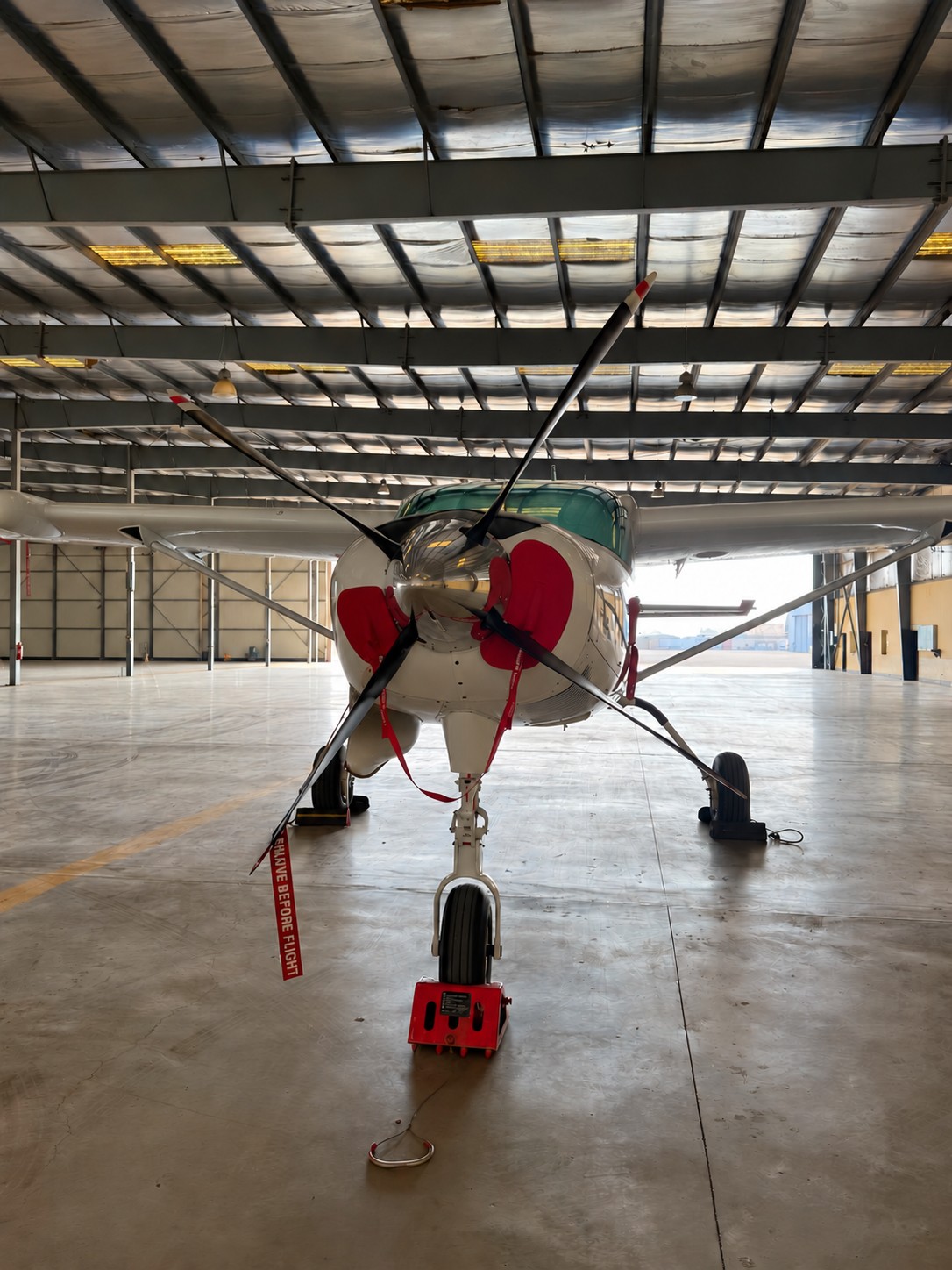
Grand Caravan EX with a McCauley four-blade propeller — aircraft configuration example
McCauley four-blade example. Historical quantitative examples retain the course’s stated three-blade Hartzell source configuration.
Free interactive pilot learning sample

An existing cargo load moves aft

Moving cargo already aboard changes its leverage without adding weight. Practice updating one clearly supplied paper record; this exercise asks for a center of gravity (CG) calculation, not a comparison with an aircraft limit.

Worldwide Aviation Operations Group

Historical study source: POH/AFM 208BPHCUS-01, Revision 1, May 22, 2013, with its matched checklist. This sample follows the Grand Caravan EX landplane, Model 208B 867 SHP, PT6A-140, Garmin G1000 and three-blade Hartzell study branch. Grand Caravan EX equipment varies. A PT6A-140 EX may have a McCauley four-blade propeller, and some EX airplanes have a 28-volt, 300 A starter-generator. The numerical 2013 POH examples retain their named Hartzell three-blade study baseline; they are not four-blade performance data. Match the installed equipment and its condition-dependent limits to the aircraft’s approved documents. Use matching aircraft records and supplements. Actual operation uses current approved documents and appropriate pilot training.

Supplied paper loading record

Fictional Juniper-Public is a Grand Caravan EX cargo loading record with no TKS load. The airplane totals already include the crate below. A paper revision changes only that crate’s own CG position; no fuel, equipment or other load changes.

Starting airplane weight
7,800 lb
Starting airplane CG
197.000 inches aft of datum
Starting moment divided by 1,000
1,536.600 lb-in/1,000
Existing crate weight
180 lb, already counted in the total
Original crate CG position
Fuselage station (FS) 172.1 inches
Revised crate CG position
Fuselage station (FS) 217.8 inches
inches aft of datum
Study references
  • POH/AFM, printed 1-17 (physical PDF 39): arm, moment and CG definitions.
  • POH/AFM, printed 6-11 (physical PDF 419): actual load positions and direct moment calculation.
  • POH/AFM, printed 6-26 (physical PDF 434): cabin zone centroid references. Aircraft and crate weights are fictional supplied inputs.
Inside C208EX-PLAN

What you will study

Your ground-study learning path

5 modules · 47 planning concepts · 20 paired cases · 40 formative questions · 10 numeric worksheets.

Use the handbook and planning maps to connect records, chart inputs and calculations. Make a prediction before revealing the supplied result, explain the evidence, and enter your own numeric worksheet answers. Complete every planning concept, all 20 supported case interpretations and all 10 numeric worksheets. The separate 40-question final requires 80% (32 correct). The course completion certificate follows the handbook, lab and final requirements.

01 · Loading records, moments and the CG envelope

Start with a supplied airplane-specific basic record. Relate datum, actual item arms and moment/1,000 to the loaded CG; distinguish seating, zones, floor loading, the piecewise forward boundary and the aft warning band. Keep the direct method separate from manifest index.

02 · Load changes and fuel-phase accounting

Trace equipment additions/removals and relocation at constant weight. Correct a stated fuel density condition and use quantity-specific fuel moments. Build ramp, takeoff and landing ledgers that retain fuel still aboard and remove ground use only once; distinguish optional TKS fluid and temporary ground-loading conditions.

03 · Takeoff planning

Choose the stated cargo-pod chart family and match weight, pressure altitude, temperature and assumptions before reading a result. Distinguish ground roll from total distance over a 50-foot obstacle, use the specified interpolation and wind or surface note, and compare the calculated distance with a supplied planning runway.

04 · Climb, cruise and fuel planning

Distinguish rate from gradient and cumulative values from an intermediate climb segment. Connect cruise distance, wind-adjusted ground speed, time and fuel flow. Reconcile included chart allowances, a stated reserve and a consistent phase ledger without removing remaining fuel from landing weight.

05 · Landing and integrated performance

Use the matching landing-weight sheet and its complete assumptions. Apply the named grass, flap or reverse note to its specified distance basis, keep ground roll within total obstacle distance, and connect destination weight, runway conditions and the bounded performance comparison.

Learning outcomes

  • Derive a loaded CG from a supplied aircraft record and actual load positions.
  • Separate gross weight and CG from occupancy, compartment, floor and restraint conditions.
  • Update weight and moment for equipment, cargo and fuel changes without double-counting.
  • Read the applicable performance chart family, conditions, units and correction basis before calculating.
  • Build a consistent fuel ledger and interpret supplied takeoff, climb, cruise and landing comparisons.
  • Keep historical planning study and fictional exercise results separate from current aircraft operating authority.

Aircraft and course applicability

Pilot loading and performance ground study based on POH/AFM 208BPHCUS-01 Revision 1, May 22, 2013 and matched 2013 checklists: Grand Caravan EX landplane, Model 208B 867 SHP, PT6A-140, Garmin G1000 and three-blade Hartzell propeller; serials 208B2197 and 208B5000 and on. Numeric performance work explicitly identifies the cargo-pod-installed branch. Base passenger/cargo loading and the optional cargo-pod TKS loading changes remain separate. Named fictional aircraft records and small training datasets support calculation practice; no generic empty weight is assigned to an actual airplane. This historical study edition is not represented as current operational documentation. Actual operation requires the airplane's current approved POH/AFM, assigned weight-and-balance and equipment records, applicable supplements and appropriate pilot training.

Grand Caravan EX equipment varies. A PT6A-140 EX may have a McCauley four-blade propeller, and some EX airplanes have a 28-volt, 300 A starter-generator. The numerical 2013 POH examples retain their named Hartzell three-blade study baseline; they are not four-blade performance data. Match the installed equipment and its condition-dependent limits to the aircraft’s approved documents.

WWAOG provides independent pilot planning ground study. A course completion certificate records this learning achievement; it does not establish a pilot certificate or rating, flight-review credit, aircraft checkout, icing qualification or operating authorization. Current aircraft-effective operating documents and appropriate flight instruction remain essential.

Before you enroll

Is this course suitable for my aircraft or role?

Pilot loading and performance ground study based on POH/AFM 208BPHCUS-01 Revision 1, May 22, 2013 and matched 2013 checklists: Grand Caravan EX landplane, Model 208B 867 SHP, PT6A-140, Garmin G1000 and three-blade Hartzell propeller; serials 208B2197 and 208B5000 and on. Numeric performance work explicitly identifies the cargo-pod-installed branch. Base passenger/cargo loading and the optional cargo-pod TKS loading changes remain separate. Named fictional aircraft records and small training datasets support calculation practice; no generic empty weight is assigned to an actual airplane. This historical study edition is not represented as current operational documentation. Actual operation requires the airplane's current approved POH/AFM, assigned weight-and-balance and equipment records, applicable supplements and appropriate pilot training. If you are choosing training for a different installation or a team, email info@wwaog.com with your aircraft configuration, learner experience and training goals.

Where do I find the price and sign up?

Open the C208EX-PLAN enrollment page for the current price, course contents and signup options. Enrollment takes place in WWAOG Academy, where learners access their assigned content.

Can our group study together?

Email info@wwaog.com to discuss group access and planning ground-study goals. In-aircraft instruction, checkout and operational qualification are not included in this online course.

Regional standards and support

Our aircraft systems courses use manufacturer technical manuals to support pilots and maintenance personnel working in FAA- and EASA-regulated aviation. Training combines detailed system explanations, knowledge checks and interactive exercises for initial familiarization and recurrent study.

C208EX-PLAN · Self-paced learning

Calculate the loading. Check the performance.