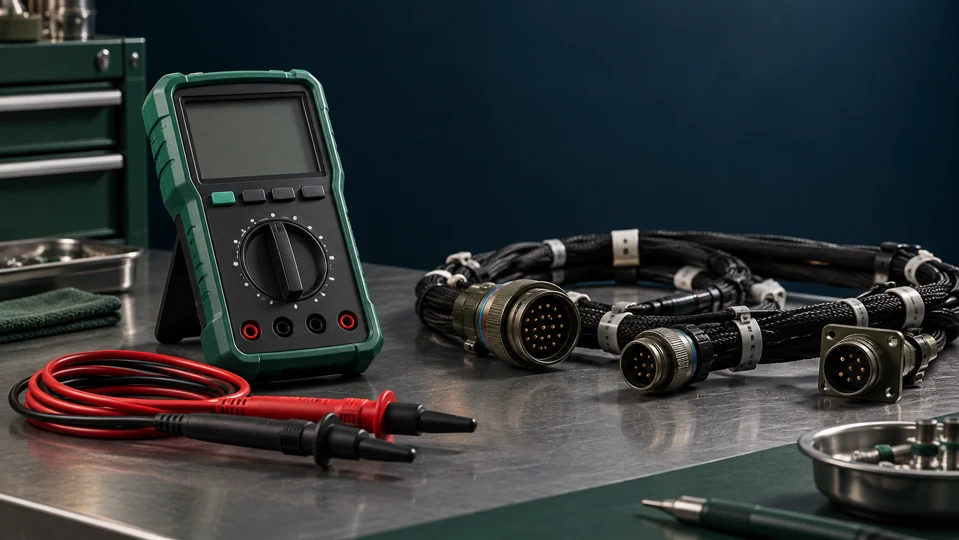
An electrical training scenario should do more than ask which component to replace. It should establish the aircraft configuration, describe the power state and require evidence for the proposed explanation. Otherwise, a learner can reach the expected answer without understanding the system.
- Define the stateConfiguration, reported source and expected behavior
- Explain the evidenceObserved behavior, shared dependencies and unknowns
- Verify the reasoningWhat would demonstrate that the explanation fits?
Start with aircraft applicability
Cessna 208, 208B and Grand Caravan EX labels are not interchangeable statements of training coverage. A course should say which configuration it teaches. Before using a scenario, identify the stated aircraft and equipment baseline, then distinguish the training example from the aircraft you actually maintain.
That habit matters when learners move between fleets. A familiar panel or a similar symptom can encourage an assumption that the same architecture and checks apply. Configuration awareness should be part of the learning objective, rather than a note read only after a wrong answer.
Describe the power state before describing a failure
In a classroom scenario, list the reported power source, relevant system state and expected behavior. Next to that, record what actually happened. The difference between expected and observed behavior is the question the learner needs to explain.
A statement such as ‘equipment is unavailable’ leaves too much unspecified. Was that equipment expected to be available in the stated condition? What evidence supports that expectation? What other functions share a relevant dependency? The course should supply the information needed to answer, or explicitly identify the missing evidence.
A hypothetical case: one unavailable function
Imagine a training case in which one function is reported unavailable while other functions appear normal. The learner is asked to choose between a source problem, a distribution problem and a problem local to the affected function. There is deliberately not enough information in that description to choose a component.
A better response identifies the missing facts: the effective configuration, the expected supply path, the state of related functions and the evidence already captured. The next question is what observation would distinguish the competing explanations. No real-aircraft switching, measurements or isolation actions are prescribed by this example.
Make the verification decision part of the exercise
A two-stage case asks for both a supported fault-isolation decision and the evidence that would demonstrate correction. This keeps the learner from treating a plausible component choice as the end of the task.
The debrief should compare the original symptom with the proposed verification evidence. A different operating condition, an unrecorded configuration change or an unexplained disappearance of the symptom can leave the original question unresolved. For actual maintenance, the required tests and acceptance criteria come from current aircraft-effective instructions.
- State the symptom without turning it into an assumed cause.
- Identify the configuration and conditions supplied by the scenario.
- Separate confirmed evidence from unanswered questions.
- Explain why the selected decision distinguishes possible causes.
- Describe the evidence needed to demonstrate correction.
How TM-027 puts the method into practice
WWAOG’s Grand Caravan EX Electrical Power & Troubleshooting course includes six power-state exercises, 25 two-stage fault cases, a 14-page handbook and eight critical checks. Its published scope connects generation, standby power, batteries, ground power, distribution and outlet systems.
The self-paced course includes a 40-question final with an 80% passing score and an online completion certificate. The course page explains the completion requirements and provides current enrollment details. Online completion remains separate from practical qualification and authorization to perform aircraft maintenance.
References and scope
This independent WWAOG learning guide supports system understanding. It does not provide aircraft maintenance procedures, operating instructions, limits or return-to-service authorization. Use current aircraft-effective maintenance data for actual aircraft work.
- WWAOG TM-027 course information
Source for course scope, exercise counts, handbook and assessment details. The discussion above is a learning framework, not an aircraft maintenance procedure.